In the complex world of electrical infrastructure, the efficiency of cable installation often hinges on the quality of the tools used to navigate underground pathways. A high-performance conduit pull tape serves as the critical link between the installation of a conduit and the successful pulling of the cable, ensuring that wires reach their destination without snagging or breaking.
Globally, as cities expand and the demand for high-speed data and stable power grows, the reliance on durable pulling solutions has intensified. Whether it is for telecommunications, power grids, or industrial automation, selecting the right pull tape can mean the difference between a project finishing ahead of schedule or facing costly delays due to conduit blockages.
Understanding the technical nuances of these tools—from tensile strength to coefficient of friction—allows engineers and contractors to optimize their workflow. By focusing on the marriage of material science and practical utility, the industry is moving toward faster, safer, and more reliable installation methods that safeguard the longevity of the entire electrical network.
Global Context of Conduit Pull Tape
The global demand for electrical and fiber optic connectivity has surged, with ISO standards and international building codes emphasizing the need for secure and efficient cabling. In this environment, conduit pull tape has evolved from a simple accessory into a specialized engineering tool. As urbanization accelerates in Asia and Africa, the scale of underground utility projects requires materials that can withstand extreme tensions and abrasive environments.
One of the primary challenges facing modern utility crews is the "stuck tape" phenomenon, where inferior materials snap or bind within a conduit, necessitating expensive excavation and repair. By adopting high-tensile, low-friction pulling solutions, the global construction industry reduces waste and minimizes the environmental impact of redundant drilling and trenching.
Defining Conduit Pull Tape and Its Role
At its core, conduit pull tape is a high-strength, lightweight ribbon or string designed to be pre-installed or blown into a conduit to facilitate the subsequent pulling of heavy electrical cables or fiber optic strands. Unlike traditional steel fish tapes, which can be rigid and prone to kinking, modern pull tapes are often made from synthetic polymers like polyester or polypropylene, offering a superior balance of flexibility and breaking strength.
In the broader context of modern industry, these tools are indispensable for the "digital transformation" of cities. Every smart city sensor, 5G small cell, and electric vehicle charging station relies on an underlying network of conduits. The pull tape acts as the primary guide, ensuring that the delicate inner cores of fiber cables are not stretched or damaged during the installation process.
Beyond technical utility, the role of the pull tape is essentially about risk mitigation. By ensuring a smooth glide through bends and couplings, it protects the integrity of the conduit system and reduces the physical strain on the workers operating the cable winches, thereby enhancing overall site safety and operational efficiency.
Core Components for Maximum Efficiency
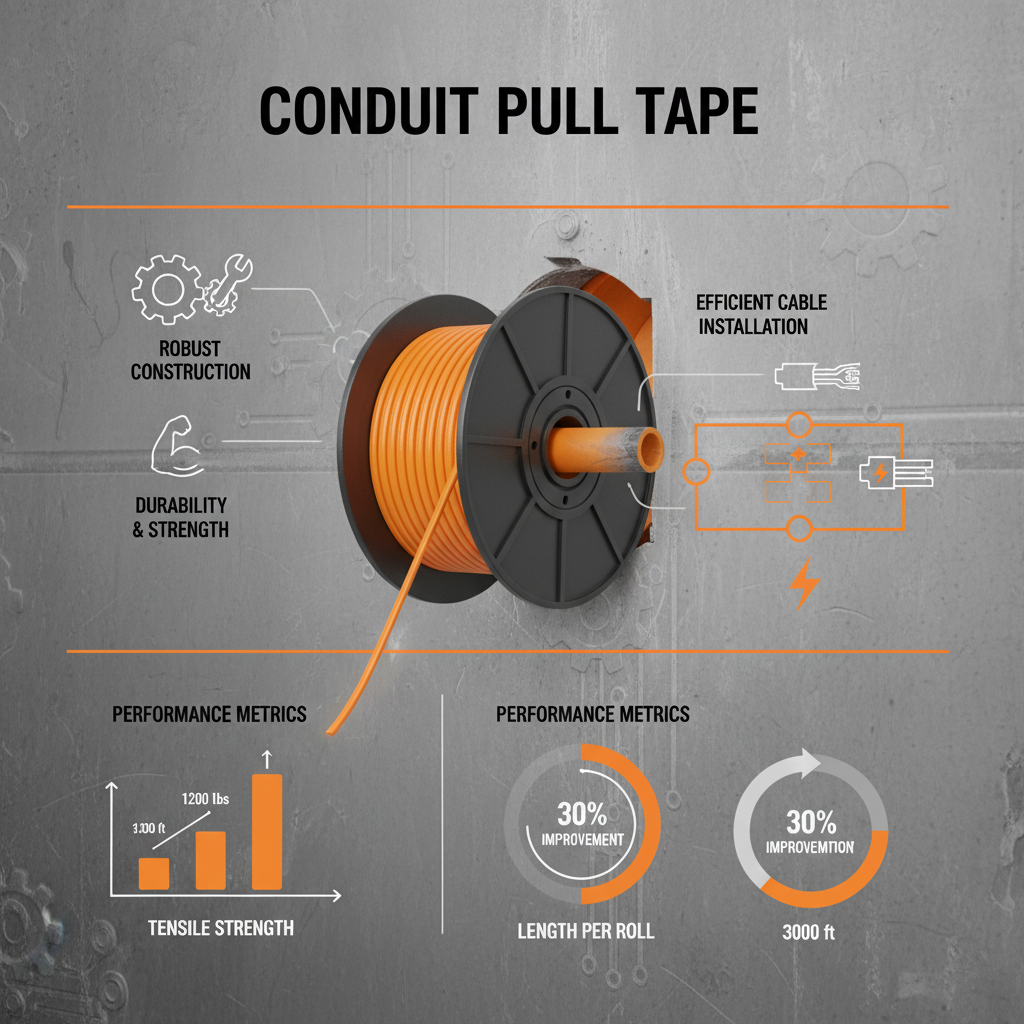
Tensile strength is the most critical factor when evaluating conduit pull tape. The material must be capable of enduring thousands of pounds of pressure without stretching or snapping, especially when navigating long runs with multiple 90-degree bends. High-tenacity polyester is frequently the gold standard here, providing the necessary backbone for heavy-duty industrial pulls.
The coefficient of friction determines how easily the tape slides through the conduit. Low-friction coatings or specialized lubricants are integrated into the tape's surface to prevent "binding." This is crucial because reducing friction not only speeds up the installation but also prevents the tape from heating up and fusing to the conduit walls under extreme tension.
Finally, durability and visibility cannot be overlooked. Most professional-grade tapes are color-coded for easy identification in the field and treated with UV stabilizers to prevent degradation if exposed to sunlight during the construction phase. This combination of strength, slickness, and resilience ensures that the tool performs consistently across various soil types and climate conditions.
Global Applications and Use Cases
The application of conduit pull tape spans across diverse sectors, from high-density urban centers to remote industrial zones. In metropolitan areas, it is used extensively for the installation of subterranean fiber optic networks, where conduits are often crowded and complex. The tape allows technicians to navigate these "mazes" with precision, ensuring that critical data links are established without disrupting existing services.
In remote industrial contexts, such as mining operations or offshore wind farms, the tape is used to deploy power cables over vast distances. These environments often involve harsh chemical exposure or extreme temperature fluctuations, requiring tapes that are chemically inert and thermally stable. In post-disaster recovery zones, rapid deployment of temporary communication lines often relies on these tools to quickly establish connectivity through existing ruins or hastily laid pipes.
Performance Comparison of Conduit Pull Tape Materials
Long-term Value and Reliability
Investing in premium conduit pull tape provides tangible long-term economic benefits. While budget-grade tapes may seem attractive initially, the cost of a single failure—resulting in a lost pull and the need to re-drill a conduit—far outweighs the marginal savings. Reliability in these tools translates directly to reduced labor costs and shorter project timelines, which are critical KPIs for any construction firm.
From a sustainability perspective, high-quality pull tapes reduce the amount of material waste on job sites. When a tape is reliable, there is less discarded plastic and metal from failed attempts. Furthermore, the increased safety provided by a predictable, high-breaking-strength tape gives workers peace of mind, fostering a culture of trust and professionalism on the site.
Future Trends in Pulling Technology
The future of conduit pull tape is being shaped by the intersection of material science and automation. We are seeing the rise of "smart tapes" integrated with conductive fibers or sensors that can detect blockages or calculate the exact distance pulled in real-time. This digital transformation allows for precise mapping of underground conduits, which is invaluable for future maintenance.
Environmental considerations are also driving the development of biodegradable or recycled polymer tapes. As the construction industry moves toward "Green Building" certifications, the demand for eco-friendly pulling solutions that do not leave microplastic residues in the soil is growing. Manufacturers are now experimenting with bio-based resins that maintain high tensile strength while being more sustainable.
Additionally, the integration of robotic "blowers" is changing how tapes are deployed. Instead of manual pushing, compressed air systems are used to propel the tape through miles of conduit in minutes. This automation reduces human error and physical strain, making the process of laying the foundation for our digital world faster and more efficient than ever before.
Overcoming Common Installation Challenges
One of the most frequent challenges encountered is the "snag," where the conduit pull tape catches on a burr or a joint in the pipe. Expert insight suggests that utilizing a "tapered" leader or a specialized blowing head can significantly reduce this risk. Ensuring that all conduit joints are properly deburred before the tape is introduced is a simple but often overlooked step that saves hours of frustration.
Another common issue is the stretching of the tape under excessive load, which can lead to unforeseen snapping. To overcome this, technicians are encouraged to use mechanical tension monitors. By keeping the pulling force within the rated limits of the tape, the integrity of both the tool and the cable being pulled is maintained, preventing the "elastic snap-back" that can be dangerous to nearby operators.
Finally, in extremely long runs, the accumulation of friction can become an insurmountable wall. The solution lies in the strategic application of high-performance cable lubricants. When paired with a low-friction pull tape, these lubricants create a hydrodynamic layer that allows cables to glide with minimal resistance, effectively doubling the maximum pullable distance without requiring additional pull points.
Comparison of Pull Tape Solutions for Different Conduit Scenarios
|
Conduit Type
|
Recommended Tape Material
|
Key Performance Metric
|
Risk Level
|
|
PVC Residential
|
Polypropylene
|
Flexibility
|
Low
|
|
HDPE Industrial
|
High-Tenacity Polyester
|
Tensile Strength
|
Medium
|
|
Steel Conduit
|
Coated Fiber
|
Abrasion Resistance
|
High
|
|
Fiber Optic Micro-duct
|
Specialized Thin-Film
|
Low Diameter
|
Medium
|
|
Underground Utility
|
Lubricated Polyester
|
Glide Efficiency
|
Medium
|
|
High-Temp Zones
|
Teflon-Infused Polymer
|
Thermal Stability
|
High
|
FAQS
A fish tape is typically a rigid or semi-rigid coil of steel or fiberglass used to "fish" through a conduit. Conduit pull tape, however, is a high-strength, flexible ribbon usually pre-installed in the conduit or blown in. Pull tapes are designed for much higher tensile loads, making them suitable for pulling heavy cables, whereas fish tapes are primarily used for guidance and lighter wires.
You should calculate the total weight of the cable, the distance of the pull, and the number of bends in the conduit. Each bend increases the friction and the required pulling force. We recommend choosing a tape with a breaking strength at least 20-30% higher than the maximum anticipated tension to provide a safety margin and prevent sudden breakage.
While some heavy-duty tapes can be reused for small jobs, it is generally not recommended for critical infrastructure. Over time, pull tapes can develop micro-tears or lose their low-friction coating. Using a compromised tape increases the risk of a break mid-pull, which is far more expensive to fix than the cost of a new tape.
Yes, for long runs or conduits with multiple bends, lubricant is still highly recommended. While the tape itself is designed to glide, the cable you are pulling may have a high coefficient of friction against the conduit wall. Lubricant reduces the overall tension on both the cable and the conduit pull tape, ensuring a smoother and safer installation.
There are two main methods: pre-installation, where the tape is laid into the conduit as the pipe is being assembled, and the "blowing" method. In the blowing method, a specialized machine uses a high volume of compressed air to propel a lightweight foam "slug" attached to the pull tape through the conduit at high speeds.
A snap is a critical failure that often requires a "recovery" operation. This may involve trying to blow a new tape through the conduit or, in worst-case scenarios, excavating the conduit to find the break. This is why using high-quality, correctly rated conduit pull tape and monitoring tension is vital to project success.
Conclusion
The strategic use of high-quality conduit pull tape is fundamental to the reliability and efficiency of modern electrical and data installations. By balancing tensile strength, low friction, and material durability, these tools mitigate the risks of project delays and costly infrastructure failures. From the initial layout to the final cable pull, the right tape ensures that the hidden arteries of our digital and electrical world are installed with precision and longevity.
As we look toward a future of smarter cities and greener energy, the demand for more innovative, sustainable, and automated pulling solutions will only increase. We encourage contractors and engineers to prioritize material quality and technical specifications over short-term cost savings to ensure the long-term integrity of their networks. For professional-grade tools and expert guidance on your next project, visit our website: www.bilopowtel.com.