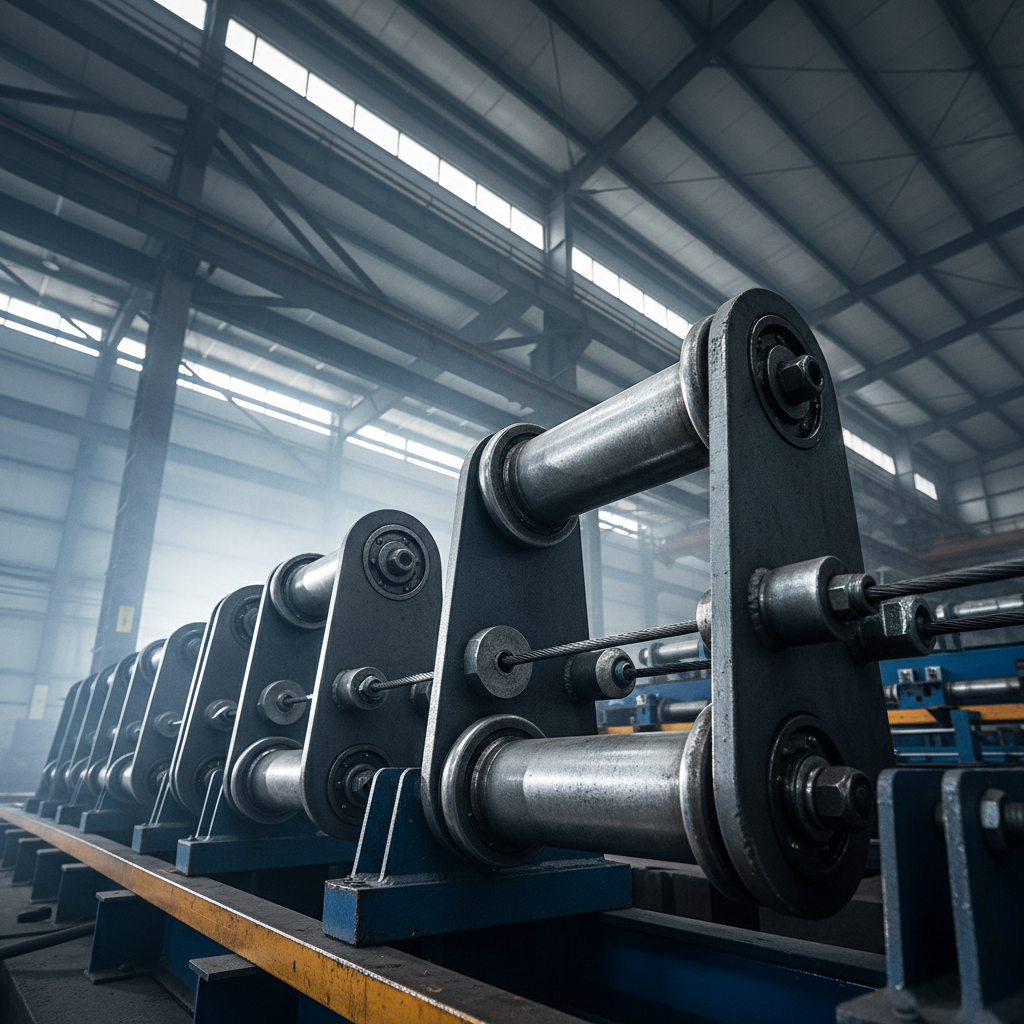
Look, I’ve been running around construction sites for fifteen years now, and let me tell you, things are changing fast. It’s not just about bigger machines anymore. Everyone’s talking about prefabrication, modular construction, and getting things done quicker, quieter, and with less waste. And all of that… it hinges on reliable cable pulling equipment. Honestly, if you can’t get the wiring right, the whole thing falls apart. It sounds simple, right? Just pull a cable. But believe me, it's anything but.
Have you noticed how everyone's obsessed with ‘smart’ everything? Smart buildings, smart factories… they all need a ton of data cables, power cables, control cables. It's a cable jungle out there. And that’s where good, solid cable pulling equipment makes the difference between a smooth operation and a complete disaster. I've seen projects grind to a halt because they skimped on this stuff, using gear that just couldn't handle the demands.
And it’s not like you can just walk into any hardware store and find what you need, either. It’s becoming increasingly specialized. We’re talking about high-tensile steel grips, hydraulic pullers, dynamic cable socks… the list goes on. The demands of modern construction – tighter spaces, more complex cable runs, stricter safety regulations – they just weren't even on the radar ten years ago. It's a whole different ballgame now.
The Changing Landscape of Cable Pulling
To be honest, the biggest shift I've seen is the move towards smaller, lighter equipment. Used to be, everything was about brute force. Massive hydraulic pullers, heavy-duty grips… But now, especially in urban environments, space is at a premium. You need gear that can navigate tight corridors, work in confined spaces, and doesn’t require a team of burly guys to operate. And the materials… they’re getting smarter, too.
Strangely enough, even though things are getting smaller, the cable demands are actually increasing. Fiber optic cables, data lines, power distribution… it's all adding up. So, you need equipment that's both compact and powerful. It’s a tricky balance, and it’s driving a lot of innovation in the cable pulling equipment industry.
Common Design Pitfalls in Cable Pulling Equipment
I encountered this at a factory in Ningbo last time – they were making these 'high-performance' cable grips, right? Looked fancy, all polished and chrome. But the jaw opening was too small! Simple as that. Tried to grip a standard 185 sq mm cable, and it just wouldn’t close properly. Wasted a whole day troubleshooting. You see it all the time – manufacturers focusing on aesthetics instead of functionality. Another big one is insufficient lubrication. Some of these dynamic cable socks, they’re supposed to reduce friction, but if they’re not properly lubricated, they can actually increase it. It’s a classic mistake.
And don’t even get me started on poorly designed handles. Ergonomics matter! You’re often pulling for hours on end, and a poorly designed handle will leave your hands aching. It sounds trivial, but it impacts productivity and, more importantly, safety.
Anyway, I think the biggest trap is trying to over-engineer things. Sometimes, simple is better. A well-designed, robust grip and a solid hydraulic puller will outperform a complex, over-featured system every time. Less is often more, especially on a busy construction site.
Materials Matter: A Hands-On Perspective
The steel in those grips… it's gotta be good. Not just any steel. You need high-tensile alloy steel, something that can withstand incredible forces without deforming. I can usually tell just by the feel of it. Good steel is heavy, dense, almost cold to the touch. Cheap steel feels… flimsy, hollow. You can tell.
The rubber coatings on some of the grips and socks are important, too. They need to be abrasion-resistant, oil-resistant, and able to withstand temperature extremes. I’ve seen rubber coatings crack and peel in the heat of summer, rendering the whole thing useless. And the smell...a cheap rubber smells like burning tires, whereas good-quality rubber has a subtle, almost sweet odor. It sounds weird, I know, but after years on the job, you start to pick up on these things.
And the cable socks themselves – the woven polyester or nylon – that’s critical. They need to be strong, durable, and have a low coefficient of friction. You don’t want them snagging or fraying during a pull. I always check the weave density and the stitching. If it looks loose or uneven, I avoid it.
Real-World Testing: Beyond the Lab
Lab testing is fine, don't get me wrong. But it doesn’t tell the whole story. You need to test this stuff in real-world conditions. I’ve personally run break-strength tests on grips using a crane and a dynamometer. You rig it up, apply increasing force, and see when it fails. It’s not pretty, but it’s informative.
Another thing we do is simulate common job site scenarios. Pulling cables through conduit with bends, over obstacles, in wet and dirty conditions. That’s where you really find out what works and what doesn't. You can’t simulate the grime and the chaos of a real construction site in a laboratory. You just can’t.
Cable Pulling Equipment Performance in Simulated Job Site Conditions
How Users Actually Employ Cable Pulling Equipment
You’d be surprised how often people misuse this stuff. I've seen guys trying to pull cables around corners that are way too sharp, creating excessive stress. And they don’t use enough lubricant! They think it's just extra work, but it's crucial. I even saw one guy using a steel cable sock to pull fiber optic cable – are you kidding me? You'll crush it!
What’s really interesting is that the skilled tradesmen usually stick to the basics. They don’t need all the bells and whistles. They want reliable, durable tools that they know will work. It's the newer guys, the ones who haven’t been around the block a few times, who tend to get distracted by the fancy gadgets.
The Pros and Cons: A Pragmatic View
Look, cable pulling equipment is essential. It speeds up the job, reduces labor costs, and improves safety. But it’s not a silver bullet. It requires proper training, regular maintenance, and a healthy dose of common sense. The biggest downside is the initial investment. Good quality gear isn’t cheap. But skimping on quality will cost you more in the long run, I guarantee it.
And there’s the issue of portability. Some of this stuff is bulky and heavy, making it difficult to maneuver in tight spaces. That’s why the trend towards lighter, more compact equipment is so important.
Ultimately, the success of any cable pulling equipment depends on the skill of the operator. You can have the fanciest gear in the world, but if the guy using it doesn’t know what he’s doing, it’s not going to matter.
Customization and Specific Applications
Last month, that small boss in Shenzhen who makes smart home devices insisted on changing the interface to on all our cable pulling systems, and the result was a three-week delay because the standard grips didn't fit! He wanted a ‘sleek, modern’ look, which is fine, but he didn’t think about the practical implications. It’s a good example of why customization needs to be approached with caution.
We've done a lot of work with data centers, where they need specialized grips and socks for delicate fiber optic cables. They’re incredibly sensitive to damage, so you need equipment that provides a gentle, controlled pull. And then there’s the oil and gas industry, where everything has to be explosion-proof. That requires a whole different set of materials and certifications.
Anyway, I think the key is to work closely with the customer to understand their specific needs and challenges. Don't just sell them a product; sell them a solution.
Summary of Customization Requirements for Cable Pulling Equipment
| Industry Sector |
Specific Requirement |
Customization Level |
Estimated Cost Impact |
| Data Centers |
Fiber Optic Cable Protection |
Medium - Specialized Grips & Socks |
10-15% Increase |
| Oil & Gas |
Explosion-Proof Certification |
High - Full System Redesign |
30-40% Increase |
| Smart Home Device Manufacturers |
Aesthetic Interface Changes (e.g., ) |
Low - Minor Component Modification |
5-10% Increase, Potential Delays |
| Industrial Automation |
High-Temperature Resistance |
Medium - Material Selection |
15-20% Increase |
| Renewable Energy (Wind Farms) |
Corrosion Resistance (Salt Spray) |
Medium - Protective Coatings |
10-15% Increase |
| Prefabricated Construction |
Lightweight & Compact Design |
Low-Medium - Material Optimization |
5-10% Increase |
FAQS
Honestly, it's underestimating the job. They see a simple cable run and think they can get away with basic equipment. But then they hit a snag – a tight bend, a long run, unexpected friction – and suddenly they’re struggling. Always overestimate the difficulty and choose equipment that can handle it. It’s better to have more power than you need than to be stuck halfway through a pull.
Crucial! I can't stress that enough. Lubrication reduces friction, protects the cable jacket, and makes the pull much smoother. Without it, you're just asking for trouble. There are tons of different lubricants out there, so choose one that's compatible with the cable type and the environmental conditions. Don't skimp on it; it’s a small investment that can save you a lot of headaches.
Good question. A dynamic sock is designed for longer pulls with bends and curves. It’s flexible and distributes the pulling force evenly. A static sock is best for straight, shorter pulls. It provides a more direct grip but isn’t as forgiving. Using the wrong one can damage the cable or even cause it to snap.
Before every use. Seriously. Check the grips for wear and tear, inspect the cable socks for fraying, and make sure the hydraulic puller is functioning properly. Look for any signs of damage or corrosion. A little preventative maintenance can save you a lot of money and downtime in the long run.
It depends. If you're doing a lot of complex cable pulls, yes, absolutely. The higher-end equipment is more durable, more reliable, and has more features. But if you're only doing occasional, simple pulls, then a more basic setup might be sufficient. Just make sure whatever you choose is up to the task.
Wear appropriate PPE – gloves, safety glasses, steel-toe boots. Make sure the pull path is clear and free of obstacles. Use proper lifting techniques. Never exceed the equipment’s rated capacity. And most importantly, pay attention to what you’re doing. Distraction can lead to accidents.
Conclusion
So, there you have it. Cable pulling equipment isn't just about the tools themselves; it's about understanding the challenges of the job, choosing the right equipment for the task, and knowing how to use it safely and effectively. It’s about the materials, the testing, the real-world conditions, and the sometimes-quirky requirements of the people who actually use it.
Ultimately, whether this thing works or not, the worker will know the moment he tightens the screw. And if that screw goes in smooth, and the cable runs clean… well, that’s a good day on the job site. If you want to avoid a bad day, start with good equipment. Check out Bilopowtel - they know their stuff.