



Jan . 27, 2026 17:08 Back to list
Arc Force Hot Start A Comprehensive Guide to Welding Performance
Arc Force Hot Start: A Comprehensive Guide
Understanding arc force hot start procedures is critical for welder safety and productivity. This article provides an in-depth look at what arc force hot start is, how it functions, its benefits, and best practices for utilization. We’ll cover settings, potential issues, and how to optimize this feature for various welding applications. Ensuring welders understand and correctly apply arc force hot start is paramount to delivering high-quality welds and maintaining a safe working environment.
What is Arc Force Hot Start?
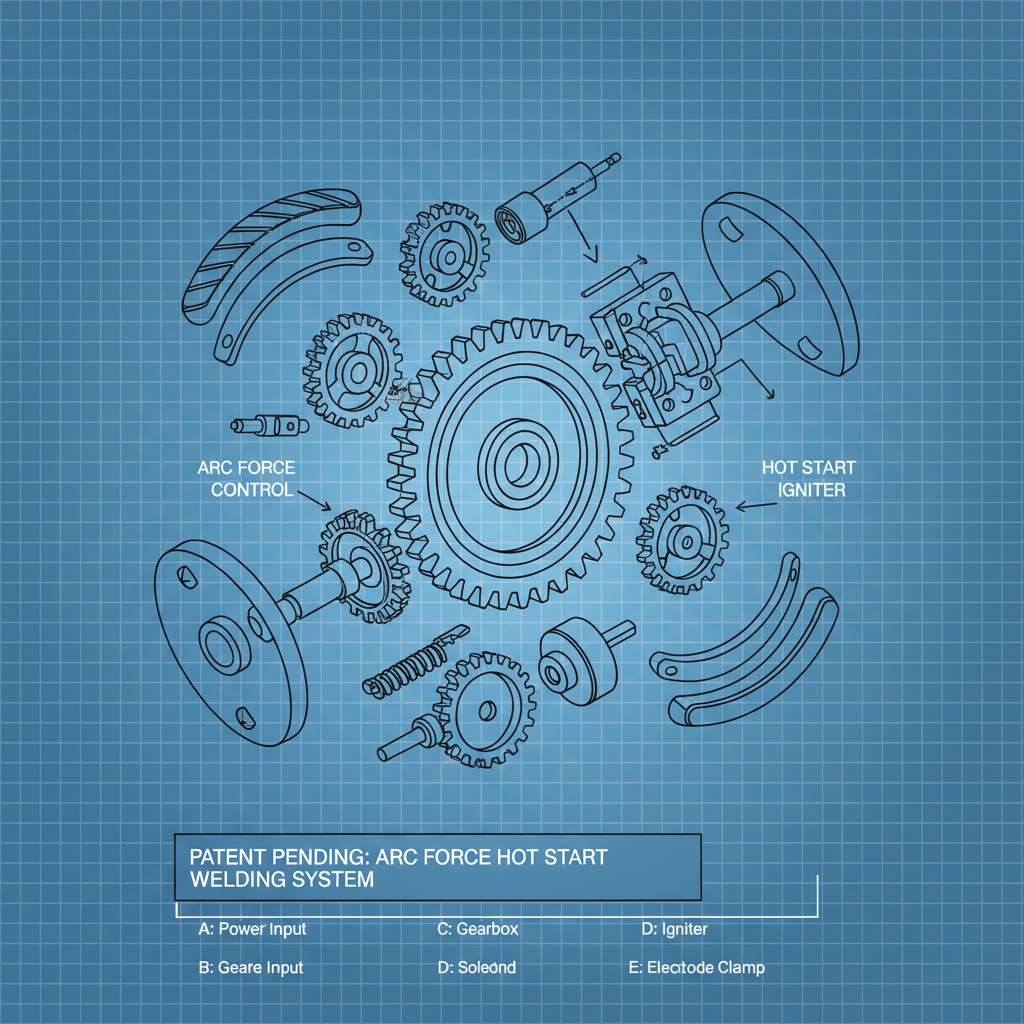
Arc force hot start is a feature found on many modern welding machines, specifically those employing stick (SMAW) welding. It’s designed to address the challenge of initiating and maintaining a stable arc, particularly with challenging electrodes or materials. Essentially, it temporarily boosts the welding current immediately upon arc initiation. This extra power helps ‘burn’ through mill scale, rust, or paint, and quickly establishes a stable, molten weld pool. Without hot start, initiating the arc can be difficult, resulting in sticking, spatter, and poor weld quality. BiloPowTel provides welding machines featuring this beneficial feature.
Key Highlights: Hot start provides a temporary boost in welding current upon arc initiation, enhancing arc stability and weld quality, especially on contaminated or difficult-to-weld materials.
How Does Arc Force Hot Start Work?
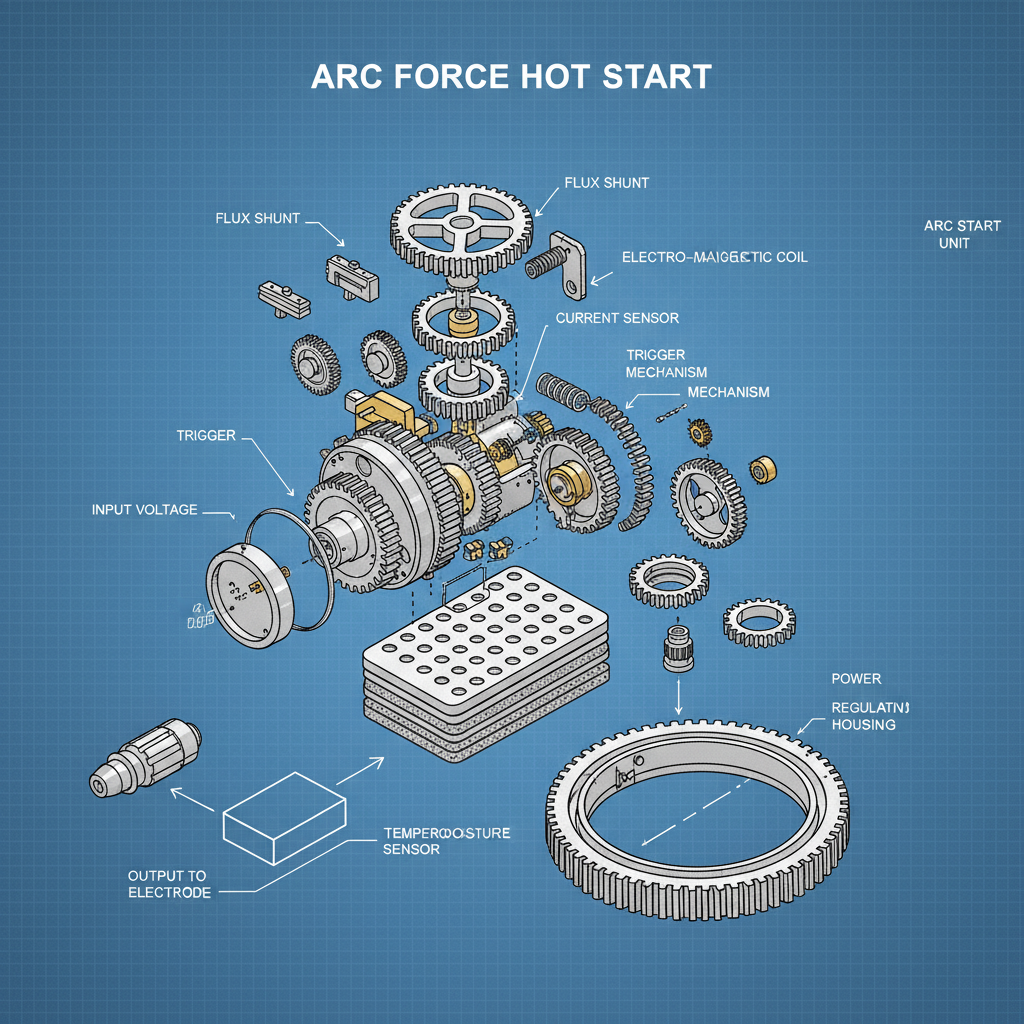
When the arc is struck, the welding machine detects the sudden increase in voltage. This triggers the hot start circuit, which delivers a pre-set surge of current for a short duration, typically between 0.5 to 2 seconds. The intensity of this surge is adjustable on many machines, allowing the welder to tailor it to the specific electrode and material being used. The increased current creates a larger, more stable arc, overcoming initial resistance and ensuring a solid weld. Think of it as giving the arc a quick ‘jump start’ to get it going.
Hot Start Benefits:
• Easier Arc Initiation
• Reduced Sticking
• Improved Weld Pool Stability
• Enhanced Weld Quality
Arc Force Hot Start Settings: Finding the Sweet Spot
The optimal hot start setting depends on several factors, including electrode type, diameter, material thickness, and welding position. Too low a setting may not provide enough boost, resulting in sticking or an unstable arc. Too high a setting can cause excessive spatter, undercut, or even burn-through, especially on thin materials. Generally, larger diameter electrodes and thicker materials require higher hot start settings. A good starting point is to consult the electrode manufacturer's recommendations, or experiment with small adjustments until the desired arc characteristics are achieved.
Potential Issues and Troubleshooting with Arc Force Hot Start
While beneficial, hot start can contribute to certain welding issues if not properly managed. Excessive spatter is a common complaint, particularly with incorrect settings. Undercutting can also occur if the initial surge is too strong. Sticking can still happen if the setting is too low or if the electrode is severely contaminated. To troubleshoot, start by verifying the electrode is clean and dry. Then, adjust the hot start setting in small increments, observing the arc characteristics after each adjustment. If spatter is excessive, reduce the hot start. If sticking persists, increase it.
Optimizing Arc Force Hot Start for Different Applications
Different welding applications require different approaches to hot start settings. For welding dirty or rusty materials, a higher setting is generally needed. When welding in out-of-position (vertical or overhead), a lower setting may be preferable to prevent excessive spatter. For root passes, where precise control is critical, a minimal hot start setting or even disabling the feature entirely may be beneficial. Mastering the adjustment of arc force hot start is a skill that comes with practice and understanding the nuances of your welding equipment and materials. BilopowTel offers training resources to assist welders in optimizing their techniques.
Conclusion: Mastering Arc Force Hot Start for Welding Success
Understanding and effectively utilizing arc force hot start is a valuable skill for any stick welder. By adjusting the settings correctly and understanding its impact on arc stability and weld quality, welders can improve their efficiency, reduce defects, and ensure safer working conditions. Investing time in learning this feature will pay dividends in the long run.
Frequently Asked Questions (FAQs)
What happens if my hot start setting is too high?
If your hot start setting is too high, you may experience excessive spatter, undercut, and potentially burn-through, especially on thinner materials. The intense initial current can create an overly aggressive arc that melts away too much metal, leading to these defects. Start by reducing the hot start setting in small increments until you achieve a cleaner arc and weld profile. Remember to monitor the arc’s behavior closely after each adjustment.
Can I use arc force hot start with all types of electrodes?
Arc force hot start is most effective with electrodes that are prone to sticking or have difficulty initiating an arc, such as E6010 and E7018. While it can be used with other electrode types, the benefits may be less noticeable. It’s always best to consult the electrode manufacturer’s recommendations for optimal settings and techniques. Some low-hydrogen electrodes may not require as much hot start as others.
How does arc force interact with hot start?
Arc force and hot start are both dynamic arc control features, but they function differently. Hot start boosts current at the beginning of the arc, while arc force adjusts current during the arc to prevent sticking. They often work in tandem; a properly adjusted hot start ensures a stable arc initiation, and arc force maintains that stability throughout the weld. Adjusting both settings in coordination is key to achieving optimal results.
Is it possible to disable the hot start feature?
Yes, many welding machines allow you to disable the hot start feature entirely. This can be useful for specific applications, such as root passes or when welding very thin materials where precise control is paramount. Refer to your welding machine’s user manual for instructions on how to disable or adjust the hot start setting.
Latest news
Precision Lifting and Pulling with the Lever Block 0.5 Ton Guide
NewsApr.16,2026
Precision Engineering Guide for High Performance Jet Lever
NewsApr.16,2026
Ultimate Guide to Choosing the Professional Industrial hoist lever
NewsApr.16,2026
Industrial Hoist Lever Chain Guide for Heavy Lifting and Rigging
NewsApr.16,2026
Industrial Lever Hoist Guide for Efficient Lifting and Pulling
NewsApr.16,2026
Ultimate Guide to Hand Ratchet Lift for Heavy Industrial Lifting
NewsApr.16,2026
- CONTACT
- ADDRESS: 188, Fengshou Road, Shijiazhuang. China
- EMAlL: info@bilopowtel.com
- PHONE: 0086-311-88862036
- WHATSAPP: 0086-152-26563165


