



Mar . 07, 2026 01:45 Back to list
Comprehensive Guide to Bonding CSST to Ground Rod for Optimal Safety
Understanding Bonding CSST to Ground Rod: A Comprehensive Guide
Proper grounding is critical for the safe and effective operation of Corrugated Stainless Steel Tubing (CSST) gas piping systems. This article provides a detailed overview of bonding CSST to ground rod, covering the importance of grounding, methods, best practices, and common challenges. A robust grounding system mitigates the risk of electrical surges damaging your gas lines and ensures the safety of your property and occupants. Understanding the nuances of this process is vital for installers, homeowners, and anyone involved in gas system maintenance.
Why is Bonding CSST to a Ground Rod Important?
CSST is susceptible to damage from lightning strikes and electrical surges. Unlike black iron pipe, CSST is not inherently conductive. Therefore, a reliable grounding system is essential to provide a path for stray electrical currents to safely dissipate into the earth. Without proper bonding, electrical energy can arc across CSST fittings, potentially igniting the gas and causing a fire or explosion. Bonding ensures the CSST system is at the same electrical potential as the rest of the building’s grounding system, preventing this dangerous scenario. National Fuel Gas Code (NFGC) and local codes mandate specific grounding requirements for CSST installations, emphasizing its critical importance.
Key Takeaway: Properly bonding CSST is not just a best practice – it’s a code requirement and a life-safety necessity.
Methods for Bonding CSST to Ground Rod
There are several accepted methods for bonding CSST to a ground rod, depending on the specific CSST system and local codes. These commonly include:
- Direct Bonding: Connecting a bonding jumper wire directly from the CSST system to the grounding electrode system (typically a ground rod or water pipe).
- Bonding to Electrical Panel: Connecting the CSST system to the electrical panel’s grounding bus bar, which is already connected to the grounding electrode system.
- Bonding at the Gas Meter: Connecting a bonding jumper between the CSST system and the gas meter’s grounding connection.
The preferred method often depends on the existing grounding infrastructure and accessibility. It's crucial to use appropriately sized bonding conductors (usually copper) to ensure a low-impedance path to ground.
Bonding Considerations:
• Use only approved bonding connectors and conductors.
• Ensure connections are clean and tight to minimize resistance.
• Regularly inspect bonding connections for corrosion or damage.
Bonding CSST to Ground Rod: A Step-by-Step Guide
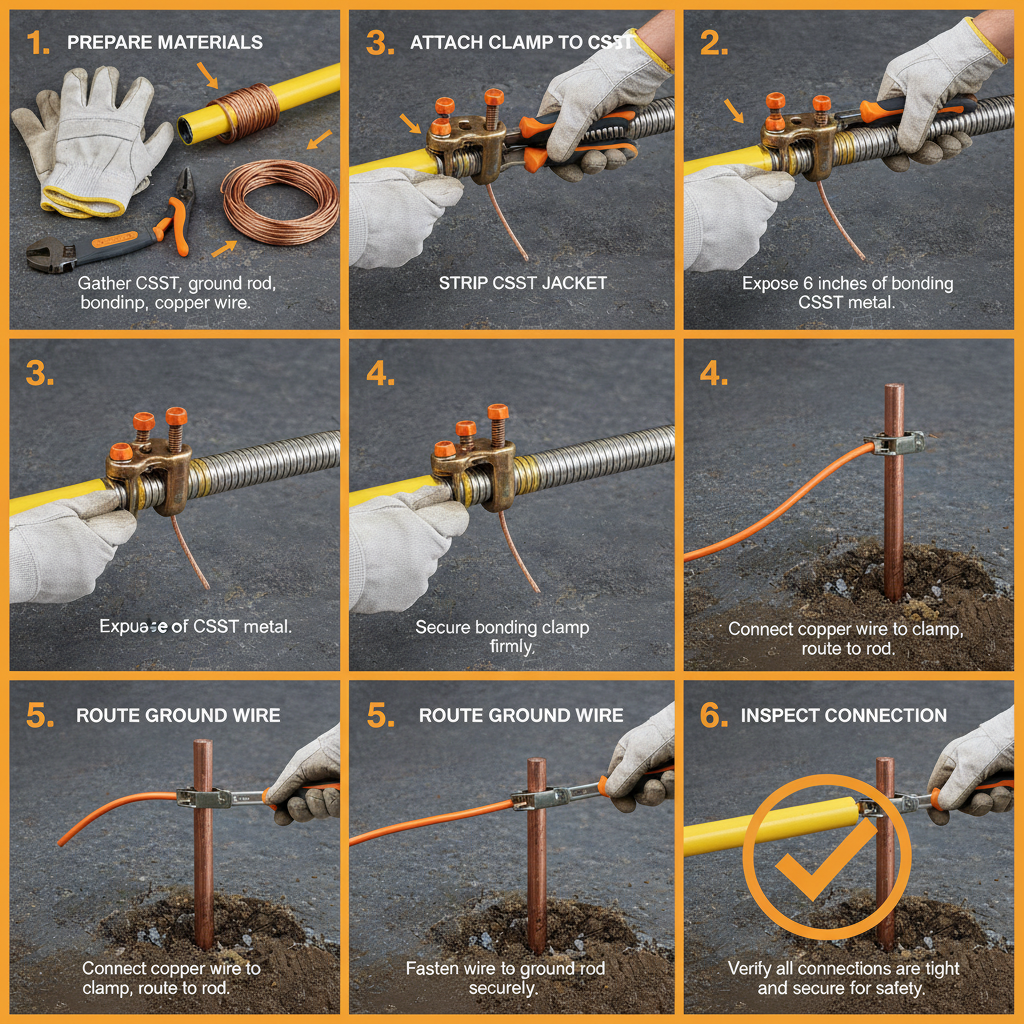
Let's focus on directly bonding the CSST to a ground rod. Here's a simplified guide (always consult the CSST manufacturer’s instructions and local codes):
- Locate the CSST System: Identify the point where the CSST enters the building.
- Install Ground Rod: Drive a suitable ground rod (typically 8 feet long, copper-clad steel) into the earth according to local codes.
- Connect Bonding Jumper: Use an appropriately sized copper bonding jumper wire (typically #6 AWG or larger) to connect the CSST system to the ground rod.
- Secure Connections: Use approved bonding connectors to create secure, low-resistance connections.
- Inspect & Test: Visually inspect all connections and use a continuity tester to verify a solid electrical path between the CSST system and the ground rod.
Comparing Bonding Methods: Cost and Effectiveness
Each bonding method has its advantages and disadvantages. Here's a comparison:
Common Challenges and Troubleshooting
Some common challenges include corrosion of bonding connections, loose connections, and inadequate grounding electrode systems. Regularly inspect connections, ensuring they are clean and tight. If you encounter high resistance or a failed continuity test, re-examine the connections and ensure the grounding electrode is properly installed and maintained. Consider consulting a qualified electrician or gas fitter if you are unsure about any aspect of the bonding process. <a href="https://www.bilopowtel.com" style="color: #e74c3c; text-decoration: underline; font-weight: 600;">BiloPowTel</a> offers expert services and solutions for CSST bonding and grounding.
Conclusion: Prioritizing Safety with Proper CSST Grounding
Proper bonding of CSST to a ground rod is a vital safety measure. By understanding the importance, methods, and potential challenges, you can ensure a safe and reliable gas piping system. Don’t compromise on safety – invest in quality bonding materials and consider professional assistance when needed. Your safety and the safety of others depend on it.
Frequently Asked Questions (FAQs)
What size bonding jumper wire is required for CSST?
Typically, #6 AWG copper bonding jumper wire is recommended for most CSST installations, but always consult the specific CSST manufacturer’s instructions and local electrical codes. The required size may vary depending on the length of the bonding run and the overall grounding system. Using a wire that is too small can compromise the effectiveness of the bonding system, while a wire that is too large isn’t necessarily more effective but may be more costly.
How often should CSST bonding connections be inspected?
CSST bonding connections should be visually inspected at least annually, or more frequently in corrosive environments. Look for signs of corrosion, loose connections, or damage to the bonding conductors. It's also recommended to perform a continuity test to verify the integrity of the bonding path. Regular inspections can help identify and address potential issues before they become a safety hazard.
Can I use aluminum bonding wire for CSST?
No, aluminum bonding wire is not recommended for CSST applications. Copper is the preferred material due to its superior conductivity and resistance to corrosion. Using aluminum wire can create a higher-resistance connection, reducing the effectiveness of the bonding system. Always adhere to the CSST manufacturer’s recommendations and local electrical codes, which typically specify copper bonding conductors.
What if my ground rod is too far from the CSST system?
If the ground rod is too far from the CSST system to run a direct bonding jumper, you may need to consider using multiple ground rods or bonding to the electrical panel’s grounding bus bar instead. Consult with a qualified electrician to determine the best solution based on your specific circumstances and local codes. Ensure the chosen method provides a low-impedance path to ground.
Latest news
Precision Lifting and Pulling with the Lever Block 0.5 Ton Guide
NewsApr.16,2026
Precision Engineering Guide for High Performance Jet Lever
NewsApr.16,2026
Ultimate Guide to Choosing the Professional Industrial hoist lever
NewsApr.16,2026
Industrial Hoist Lever Chain Guide for Heavy Lifting and Rigging
NewsApr.16,2026
Industrial Lever Hoist Guide for Efficient Lifting and Pulling
NewsApr.16,2026
Ultimate Guide to Hand Ratchet Lift for Heavy Industrial Lifting
NewsApr.16,2026
- CONTACT
- ADDRESS: 188, Fengshou Road, Shijiazhuang. China
- EMAlL: info@bilopowtel.com
- PHONE: 0086-311-88862036
- WHATSAPP: 0086-152-26563165


