



Apr . 04, 2026 01:45 Back to list
Comprehensive Guide to the CM 653 Hoist Features and Applications
Understanding the CM 653 Hoist: A Comprehensive Guide
The CM 653 hoist is a widely used and reliable lifting solution in various industrial and commercial applications. Known for its durability, efficiency, and safety features, it’s a crucial tool for material handling. This article will provide a detailed overview of the CM 653 hoist, exploring its specifications, applications, benefits, and maintenance requirements. Understanding the capabilities of a hoist like the CM 653 can significantly improve operational efficiency and workplace safety.
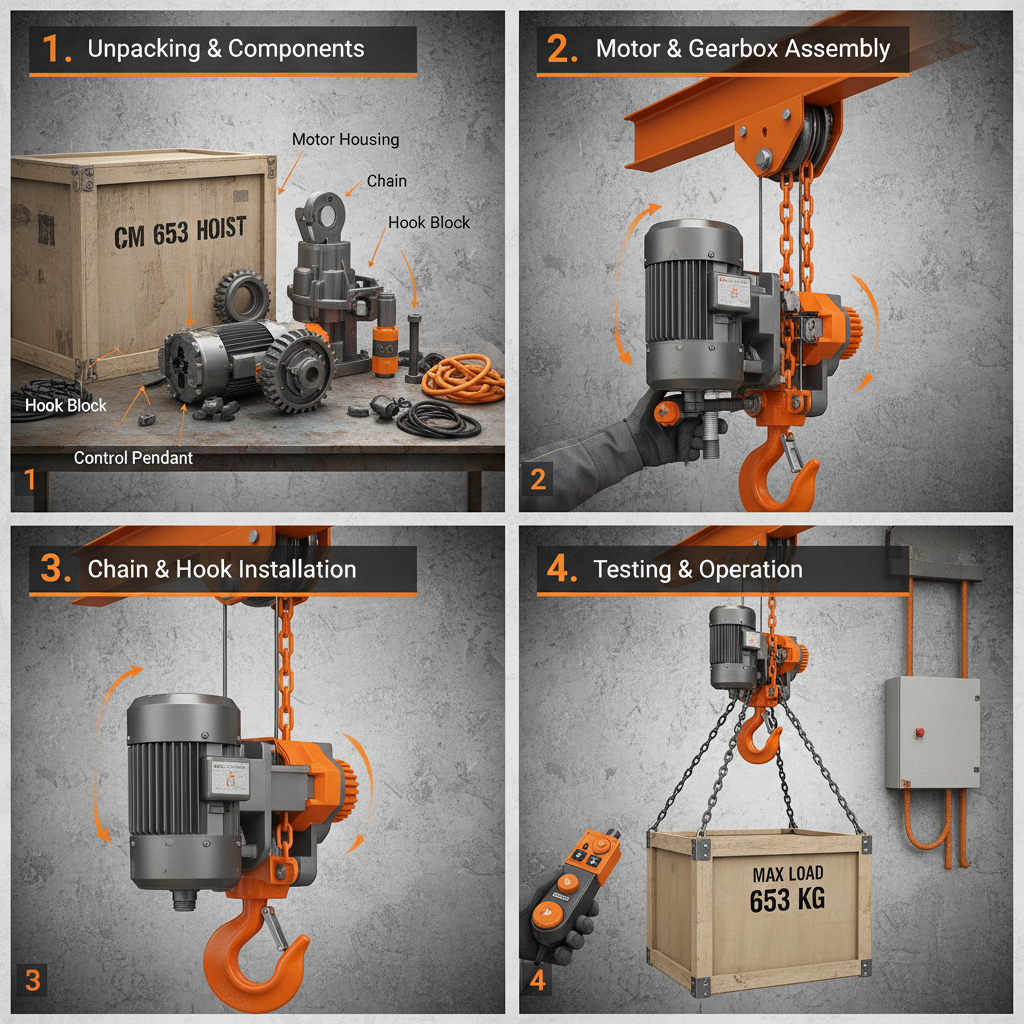
Key Features of the CM 653 Hoist
The CM 653 hoist boasts several key features that contribute to its popularity and effectiveness. It’s typically a wire rope hoist, known for its high lifting capacity and versatility. These hoists are commonly equipped with a robust motor, providing ample power for demanding tasks. Safety features, such as overload protection and emergency stop mechanisms, are integral to the design. Furthermore, the CM 653 is often designed for easy installation and maintenance, reducing downtime and operational costs. The hoist’s compact design allows for use in confined spaces, and the durable construction ensures a long service life. A well-maintained CM 653 hoist is an essential asset for any lifting operation.
Key Highlights: Robust motor, high lifting capacity, overload protection, emergency stop, easy installation and maintenance, compact design.
CM 653 Hoist: Applications Across Industries
The CM 653 hoist finds applications in a wide range of industries. In manufacturing, it’s used for moving materials and components along production lines. Construction sites utilize these hoists for lifting heavy materials to elevated work areas. Warehouses rely on CM 653 hoists for efficient loading and unloading of goods. The automotive industry employs these hoists in engine assembly and vehicle maintenance. Furthermore, they are common in shipyards for lifting and positioning large components. The versatility and reliability of the CM 653 hoist makes it an indispensable tool for various lifting tasks.
Application Benefits:
• Increased efficiency in material handling
• Improved safety in lifting operations
• Reduced manual labor
• Versatility for various industrial needs
CM 653 Hoist vs. Other Hoist Types: A Comparison
The CM 653 hoist, as a wire rope hoist, differs from other types like chain hoists and lever hoists in several key aspects. Chain hoists are generally more portable but have lower lifting capacities. Lever hoists are ideal for precise positioning but require more manual effort. The CM 653 offers a balance of lifting capacity, speed, and control, making it suitable for a wider range of applications. Compared to air hoists, the CM 653 does not require a compressed air supply, simplifying installation. Choosing the right hoist depends on the specific lifting requirements and the work environment. The CM 653 hoist stands out for its robust performance and reliability in demanding industrial settings.
Maintenance and Safety Considerations for CM 653 Hoists
Regular maintenance is critical for ensuring the safe and reliable operation of the CM 653 hoist. This includes routine inspections of the wire rope for wear and tear, lubrication of moving parts, and checking the functionality of safety mechanisms. Proper storage is also important, protecting the hoist from the elements and preventing corrosion. Operators should receive adequate training on safe lifting procedures and be aware of the hoist’s load capacity. Never exceed the rated load, and always ensure the load is properly secured before lifting. Following these safety precautions will significantly reduce the risk of accidents and extend the service life of the CM 653 hoist.
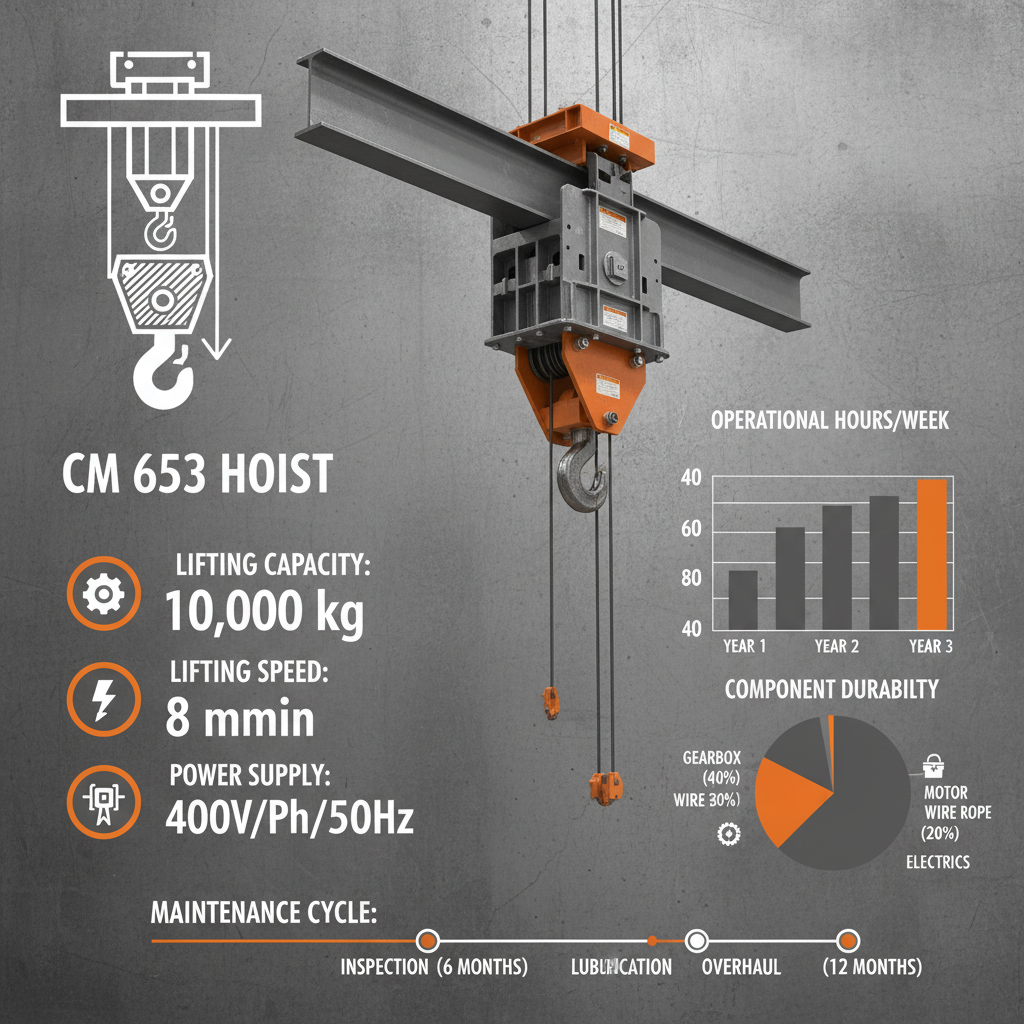
Technical Specifications
Here’s a look at typical technical specifications for the CM 653 Hoist. Actual specifications may vary by manufacturer and model.
Conclusion: The CM 653 - A Reliable Lifting Partner
The CM 653 hoist is a versatile and dependable solution for a wide range of lifting applications. Its robust construction, safety features, and ease of maintenance make it a valuable asset for businesses across various industries. Choosing the right hoist is essential for optimizing efficiency and ensuring a safe working environment.
Frequently Asked Questions (FAQs)
What is the typical lifting height for a CM 653 hoist?
The standard lifting height for a CM 653 hoist typically ranges from 3 to 30 meters. However, custom lifting heights are often available to meet specific application needs. When specifying the lifting height, it’s important to consider the height of the building or structure, the required clearance for movement, and any potential obstructions. Ensure the wire rope length is sufficient for the desired lifting height and allows for proper spooling on the drum.
How often should the wire rope be inspected?
The wire rope should be visually inspected before each use for any signs of wear, damage, or corrosion. A more thorough inspection should be conducted at least once a month by a qualified person. Look for broken wires, kinks, crushing, and excessive abrasion. If any damage is detected, the wire rope should be replaced immediately. Regular lubrication of the wire rope can help to prevent corrosion and extend its service life.
What safety features are included in the CM 653 hoist?
The CM 653 hoist is equipped with several safety features, including overload protection, which prevents lifting loads exceeding the hoist’s capacity. An emergency stop button allows for immediate termination of the lifting operation in case of an emergency. Additionally, many models include a brake system to prevent the load from dropping in the event of a power failure. Regular testing of these safety features is crucial to ensure their proper functionality.
Latest news
Precision Lifting and Pulling with the Lever Block 0.5 Ton Guide
NewsApr.16,2026
Precision Engineering Guide for High Performance Jet Lever
NewsApr.16,2026
Ultimate Guide to Choosing the Professional Industrial hoist lever
NewsApr.16,2026
Industrial Hoist Lever Chain Guide for Heavy Lifting and Rigging
NewsApr.16,2026
Industrial Lever Hoist Guide for Efficient Lifting and Pulling
NewsApr.16,2026
Ultimate Guide to Hand Ratchet Lift for Heavy Industrial Lifting
NewsApr.16,2026
- CONTACT
- ADDRESS: 188, Fengshou Road, Shijiazhuang. China
- EMAlL: info@bilopowtel.com
- PHONE: 0086-311-88862036
- WHATSAPP: 0086-152-26563165


