-
 Afrikaans
-
 Albanian
-
 Amharic
-
 Arabic
-
 Armenian
-
 Azerbaijani
-
 Basque
-
 Belarusian
-
 Bengali
-
 Bosnian
-
 Bulgarian
-
 Catalan
-
 Cebuano
-
 Corsican
-
 Croatian
-
 Czech
-
 Danish
-
 Dutch
-
 English
-
 Esperanto
-
 Estonian
-
 Finnish
-
 French
-
 Frisian
-
 Galician
-
 Georgian
-
 German
-
 Greek
-
 Gujarati
-
 Haitian Creole
-
 hausa
-
 hawaiian
-
 Hebrew
-
 Hindi
-
 Miao
-
 Hungarian
-
 Icelandic
-
 igbo
-
 Indonesian
-
 irish
-
 Italian
-
 Japanese
-
 Javanese
-
 Kannada
-
 kazakh
-
 Khmer
-
 Rwandese
-
 Korean
-
 Kurdish
-
 Kyrgyz
-
 Lao
-
 Latin
-
 Latvian
-
 Lithuanian
-
 Luxembourgish
-
 Macedonian
-
 Malgashi
-
 Malay
-
 Malayalam
-
 Maltese
-
 Maori
-
 Marathi
-
 Mongolian
-
 Myanmar
-
 Nepali
-
 Norwegian
-
 Norwegian
-
 Occitan
-
 Pashto
-
 Persian
-
 Polish
-
 Portuguese
-
 Punjabi
-
 Romanian
-
 Russian
-
 Samoan
-
 Scottish Gaelic
-
 Serbian
-
 Sesotho
-
 Shona
-
 Sindhi
-
 Sinhala
-
 Slovak
-
 Slovenian
-
 Somali
-
 Spanish
-
 Sundanese
-
 Swahili
-
 Swedish
-
 Tagalog
-
 Tajik
-
 Tamil
-
 Tatar
-
 Telugu
-
 Thai
-
 Turkish
-
 Turkmen
-
 Ukrainian
-
 Urdu
-
 Uighur
-
 Uzbek
-
 Vietnamese
-
 Welsh
-
 Bantu
-
 Yiddish
-
 Yoruba
-
 Zulu



May . 01, 2026 06:07 Roʻyxatga qaytish
Professional Cable Duct Rodder for Efficient Underground Installation
In the modern era of rapid urbanization and digital transformation, the efficiency of underground infrastructure deployment has become a critical bottleneck for global connectivity. The cable duct rodder serves as the indispensable backbone for this process, allowing technicians to navigate complex conduits and install essential fiber optic and power cables with precision. Understanding the nuances of these tools is not just about technical specifications, but about ensuring the reliability of the networks that power our smart cities and industrial hubs.
From a global perspective, the demand for high-speed data transmission and stable electrical grids has surged, leading to an unprecedented expansion of underground ducting systems. Whether it is implementing 5G infrastructure or upgrading aging municipal power lines, the use of a professional cable duct rodder reduces labor costs, minimizes the risk of cable damage, and significantly accelerates project timelines. The ability to push through bends and obstructions effectively is what separates a successful installation from a costly operational failure.
By integrating advanced materials like fiberglass and high-strength polymers, modern duct rodding equipment has evolved to meet the rigorous demands of the Construction and Utility Tools sector. For professionals in the field, mastering the application of the cable duct rodder means enhancing operational safety and ensuring that critical utility links are established without the need for disruptive trenching, thereby promoting a more sustainable approach to urban development.
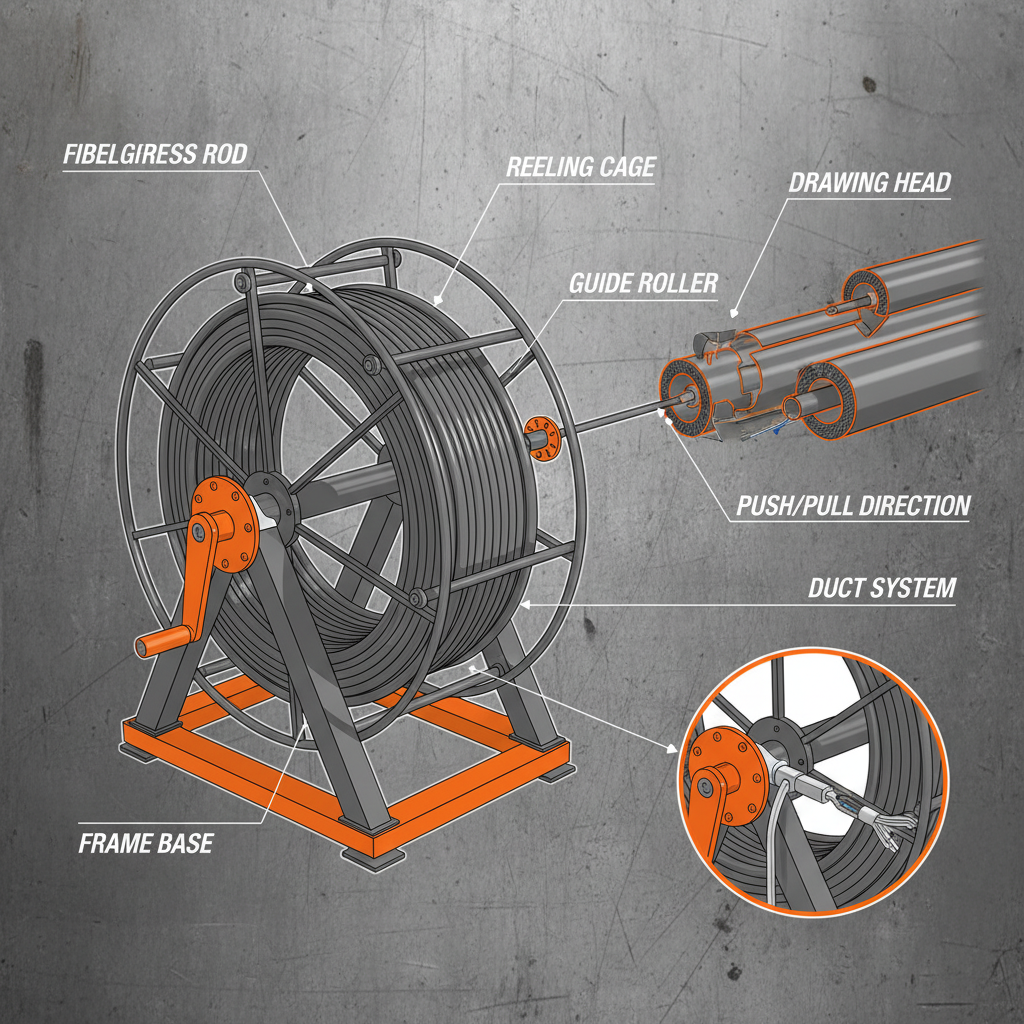
Global Industry Context of Cable Duct Rodders
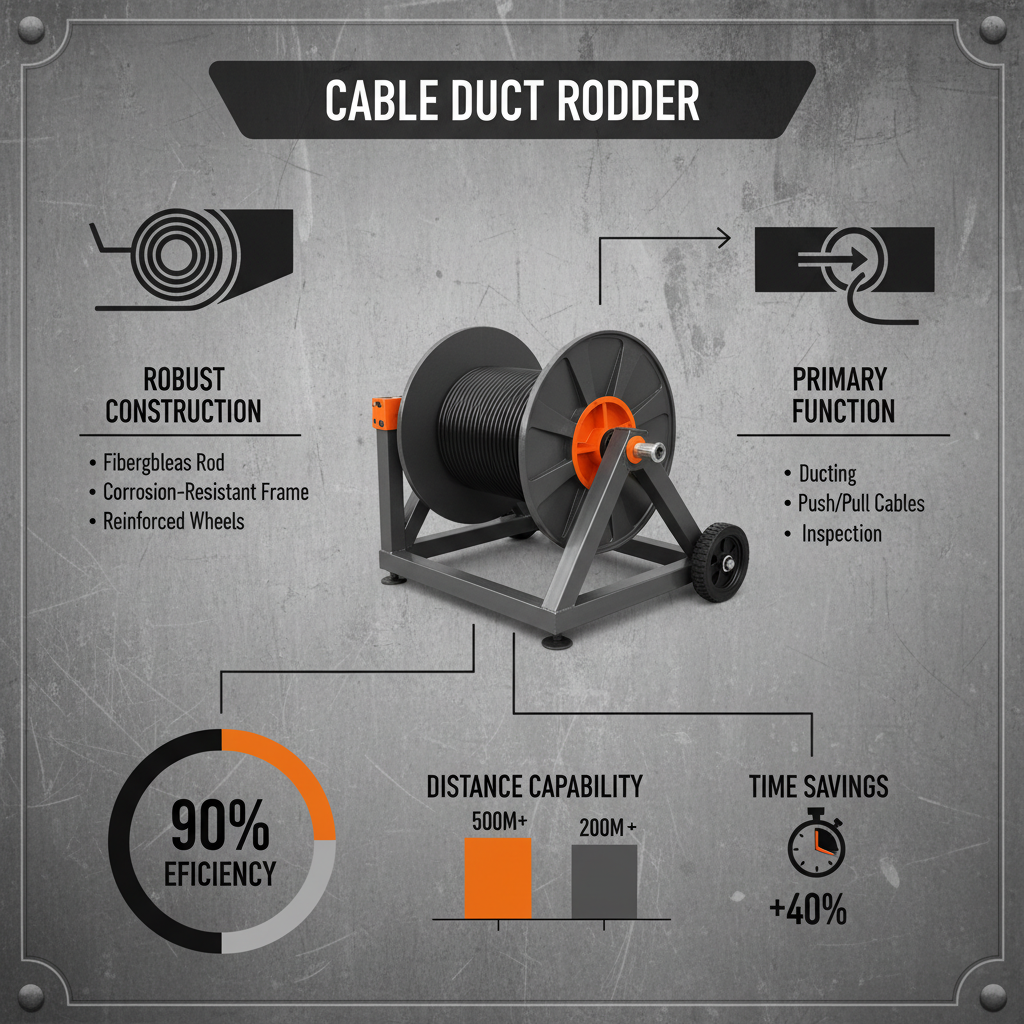
The global utility sector is currently witnessing a massive shift toward undergrounding cables to protect infrastructure from extreme weather events and to improve urban aesthetics. According to industrial trends aligned with ISO standards for cable management, the reliance on a high-quality cable duct rodder has become paramount. As cities grow denser, the complexity of the underground "labyrinth" increases, making traditional manual pulling methods obsolete and inefficient.
The primary challenge addressed by the cable duct rodder is the prevention of cable tension failure during installation. When cables are pulled through long distances or sharp angles, the friction can lead to insulation tears or fiber breakage. By utilizing a specialized rodder to first "probe" the path and then pull the cable, technicians ensure that the conduit is clear and the pulling force is evenly distributed, drastically reducing the risk of expensive network outages.
Tez-tez so'raladigan savollar
Fiberglass rodders offer significantly higher rigidity and tensile strength, making them ideal for longer distances and heavier cables. Nylon rodders are generally more flexible and are used for shorter, tighter runs where a high degree of bendability is required. For most professional utility work, fiberglass is the preferred choice due to its durability and resistance to compression.
To prevent snapping, always maintain a steady, moderate pressure and avoid sudden jerks. If you encounter resistance, do not force the rod; instead, try pulling it back slightly and pushing again to "feel" the obstruction. Using a motorized rodder with torque control can also help by automatically adjusting the force to prevent buckling and structural failure.
Only if the rodder is specifically rated as non-conductive. Most professional-grade fiberglass rodders are designed to be non-conductive, but it is crucial to verify the manufacturer's specifications. Always follow local safety regulations and use appropriate PPE when working near live electrical systems to ensure operator safety.
With proper care—such as cleaning the rod after each use and avoiding overloading the tensile limits—a high-quality rodder can last for several years. The lifespan depends heavily on the environment; highly corrosive soils or extremely sharp conduit bends will wear down the material faster than standard urban installations.
First, avoid pulling with excessive force, as this may snap the rod and leave a permanent blockage. Try rotating the rod while pulling back to loosen it from the obstruction. If it remains stuck, you may need to use a specialized retrieval tool or a lubricant to reduce friction, or in extreme cases, a locator device to find the exact point of the jam.
Yes, for any contractor handling mid-to-large scale projects. Motorized rodders drastically reduce labor time and physical fatigue, allowing a single technician to do the work of two or three. The increase in speed and the reduction in cable damage risks typically offset the initial cost within the first few major projects.
Conclusion
The cable duct rodder is far more than a simple utility tool; it is a critical enabler of the modern connected world. By combining material durability, engineering precision, and operational efficiency, it allows the seamless deployment of the infrastructure that powers our digital and electrical lives. From the reduction of urban disruption to the acceleration of 5G rollout, its value is measured not just in meters of cable pulled, but in the reliability and sustainability of our global networks.
As we move toward an era of smarter, more autonomous infrastructure, the evolution of rodding technology will continue to drive the industry forward. We encourage utility professionals and project managers to invest in high-quality, certified equipment that prioritizes safety and long-term performance. For those looking to optimize their cable laying operations with industry-leading tools, visit our website: www.bilopowtel.com
So'ngi yangiliklar
Professional Guide to Cable Installation with Ethernet Fish Tape
YangiliklarJul.01,2026
Professional Cable Installation Guide Using a Fish Tape
YangiliklarJun.29,2026
Professional Cable Installation Guide with 30m fish tape
YangiliklarJun.27,2026
Mastering Cable Installation with the 1 2 fish tape Guide
YangiliklarJun.26,2026
Ultimate Guide to Using 3 8 Fish Tape for Electrical Wiring
YangiliklarJun.25,2026
Best Electric Hoists for Sale A Complete Industrial Buyers Guide
YangiliklarJun.23,2026
- ALOQA
- MANZIL: 188, Fengshou yo'li, Shijiazhuang. Xitoy
- E-Pochta: info@bilopowtel.com
- TELEFON: 0086-311-88862036
- WHATSAPP: 0086-152-26563165