



-
 Afrikaans
-
 Albanian
-
 Amharic
-
 Arabic
-
 Armenian
-
 Azerbaijani
-
 Basque
-
 Belarusian
-
 Bengali
-
 Bosnian
-
 Bulgarian
-
 Catalan
-
 Cebuano
-
 Corsican
-
 Croatian
-
 Czech
-
 Danish
-
 Dutch
-
 English
-
 Esperanto
-
 Estonian
-
 Finnish
-
 French
-
 Frisian
-
 Galician
-
 Georgian
-
 German
-
 Greek
-
 Gujarati
-
 Haitian Creole
-
 hausa
-
 hawaiian
-
 Hebrew
-
 Hindi
-
 Miao
-
 Hungarian
-
 Icelandic
-
 igbo
-
 Indonesian
-
 irish
-
 Italian
-
 Japanese
-
 Javanese
-
 Kannada
-
 kazakh
-
 Khmer
-
 Rwandese
-
 Korean
-
 Kurdish
-
 Kyrgyz
-
 Lao
-
 Latin
-
 Latvian
-
 Lithuanian
-
 Luxembourgish
-
 Macedonian
-
 Malgashi
-
 Malay
-
 Malayalam
-
 Maltese
-
 Maori
-
 Marathi
-
 Mongolian
-
 Myanmar
-
 Nepali
-
 Norwegian
-
 Norwegian
-
 Occitan
-
 Pashto
-
 Persian
-
 Polish
-
 Portuguese
-
 Punjabi
-
 Romanian
-
 Russian
-
 Samoan
-
 Scottish Gaelic
-
 Serbian
-
 Sesotho
-
 Shona
-
 Sindhi
-
 Sinhala
-
 Slovak
-
 Slovenian
-
 Somali
-
 Spanish
-
 Sundanese
-
 Swahili
-
 Swedish
-
 Tagalog
-
 Tajik
-
 Tamil
-
 Tatar
-
 Telugu
-
 Thai
-
 Turkish
-
 Turkmen
-
 Ukrainian
-
 Urdu
-
 Uighur
-
 Uzbek
-
 Vietnamese
-
 Welsh
-
 Bantu
-
 Yiddish
-
 Yoruba
-
 Zulu



Feb . 12, 2026 10:10 Tillbaka till listan
Optimizing Operations with a Robust 4 ton Cable Puller for Heavy Lifting
The 4 ton cable puller is an essential piece of equipment across a multitude of industries, playing a vital role in lifting, pulling, and positioning heavy loads. From construction and manufacturing to marine operations and disaster relief, its robust design and considerable capacity make it a cornerstone of efficient and safe material handling. Understanding the capabilities and applications of a 4 ton cable puller is crucial for professionals seeking to optimize their operations and ensure project success.
Globally, the demand for reliable lifting solutions is consistently high, driven by infrastructure development, industrial growth, and the increasing need for efficient logistics. The 4 ton cable puller addresses this need with a balance of power and portability, making it suitable for both large-scale projects and more localized tasks. Its adoption is particularly significant in regions experiencing rapid economic expansion, where investment in infrastructure is paramount.
The inherent versatility of a 4 ton cable puller, coupled with ongoing advancements in design and materials, ensures its continued relevance in a dynamic industrial landscape. It’s a tool that empowers professionals to overcome logistical challenges, enhance productivity, and maintain high safety standards across a broad spectrum of applications. 4 tons kabeldragare solutions are becoming increasingly sought after.
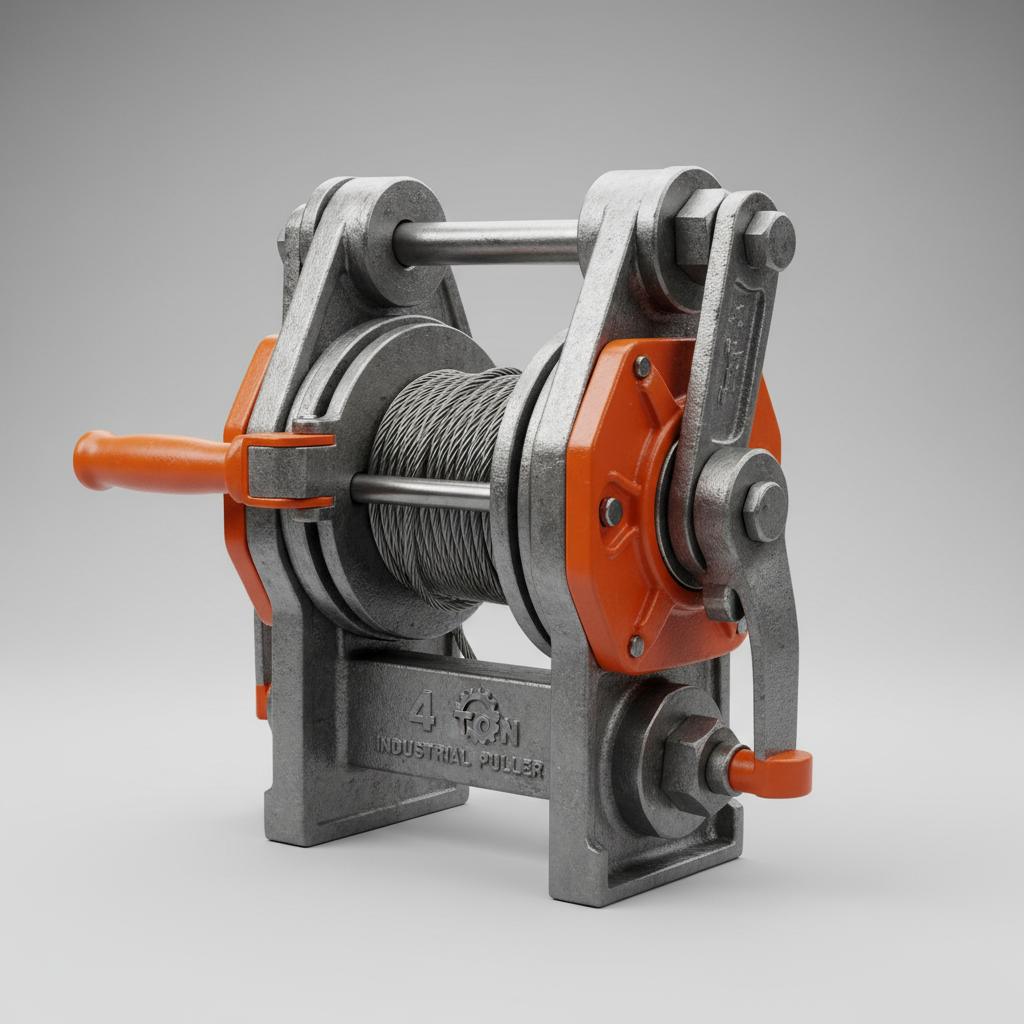
The Core Functionality of 4 ton cable puller
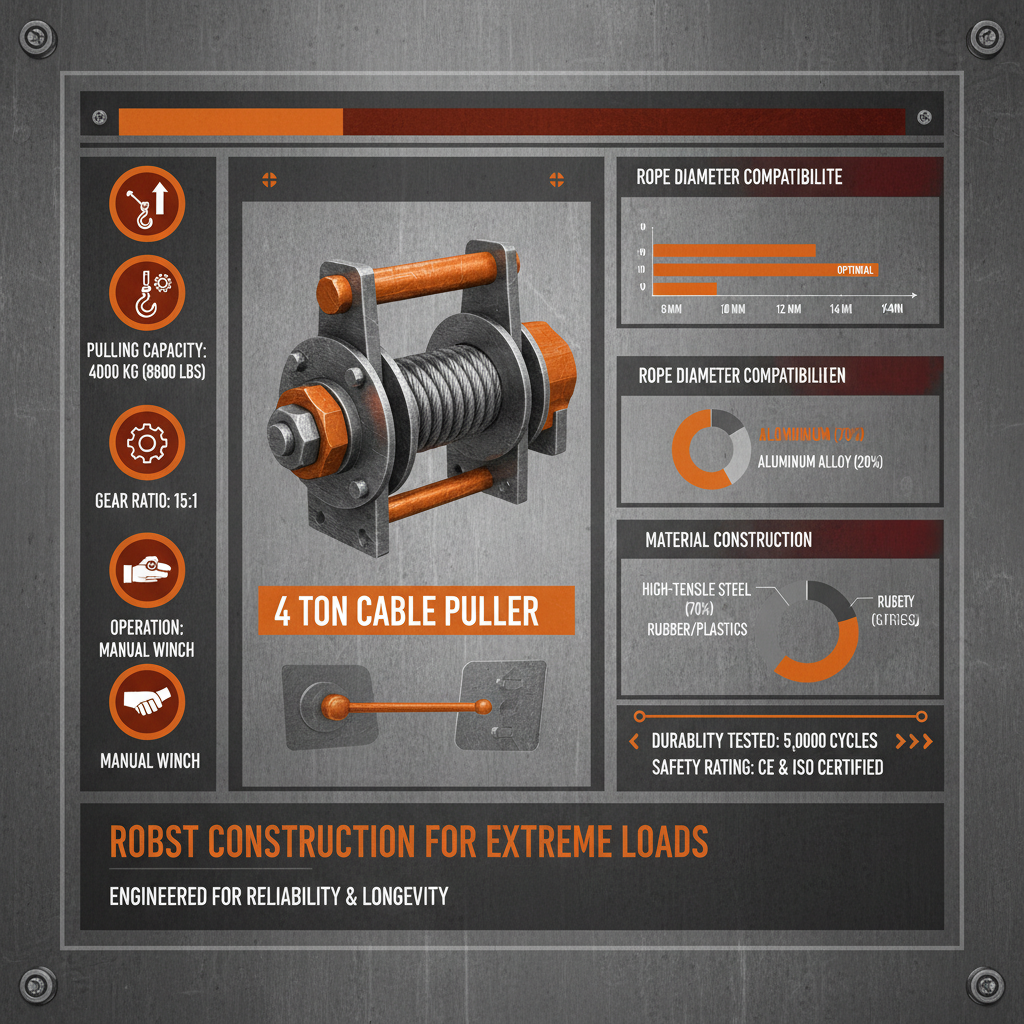
At its core, a 4 ton cable puller provides a controlled and powerful means of applying tensile force. This functionality is crucial in scenarios where manual lifting is impractical or unsafe. The cable puller utilizes a winding mechanism, powered either manually, electrically, or hydraulically, to draw a cable and exert a pulling force of up to 4 tons (approximately 8,818 pounds). 4 tons kabeldragare reliability is paramount.
The design often incorporates features like multiple lifting points, variable speed control, and robust braking systems to ensure precision and safety. Modern units often feature durable steel construction and protective coatings for longevity in demanding environments. The ease of operation and relatively compact size enhance its adaptability to various work sites.
Vanliga frågor
Most reputable 4 ton cable puller manufacturers incorporate a significant safety margin, typically ranging from 1.5 to 2 times the stated capacity. This means a 4-ton puller can often handle loads exceeding 4 tons, but consistently exceeding the rated capacity is strongly discouraged and can compromise safety and longevity. Adhering to the manufacturer’s guidelines is essential.
High-tensile steel cable is the most common choice for 4 ton cable pullers due to its strength, durability, and resistance to abrasion. The cable diameter and construction will vary depending on the specific application and manufacturer's recommendations. Synthetic cables are also available, offering advantages in weight reduction but generally with lower tensile strength.
Regular inspection is critical for maintaining the safety and performance of a 4 ton cable puller. Inspections should be performed before each use, as well as at least annually by a qualified technician. Inspect the cable for fraying, kinks, or corrosion, and check the mechanical components for signs of wear or damage. Maintain a detailed inspection log.
Using a standard 4 ton cable puller in hazardous environments is generally not recommended. If operation in such conditions is necessary, it’s crucial to utilize a specifically designed explosion-proof unit that meets relevant safety standards (e.g., ATEX, IECEx). These units incorporate features to prevent ignition sources and ensure safe operation in potentially dangerous atmospheres.
Regular maintenance includes lubricating moving parts, inspecting and replacing the cable as needed, checking the braking system, and ensuring all fasteners are tight. For electric or hydraulic units, inspect fluid levels, hoses, and electrical connections. Following the manufacturer's maintenance schedule is vital for preventing breakdowns and prolonging the lifespan of the equipment.
Always wear appropriate personal protective equipment (PPE), including gloves, safety glasses, and steel-toed boots. Ensure the load is properly secured and balanced before lifting. Maintain a safe distance from the cable and load during operation. Never exceed the rated capacity of the puller. Follow all manufacturer's safety guidelines and receive proper training before operating the equipment.
Conclusion
In conclusion, the 4 ton cable puller remains a critical tool across numerous industries, offering a powerful, versatile, and increasingly sophisticated solution for heavy lifting and material handling. Its enduring relevance stems from its ability to enhance efficiency, improve safety, and reduce operational costs. The continuous advancements in materials, automation, and digital integration promise to further expand its capabilities and solidify its position as a cornerstone of modern industrial operations.
Looking ahead, investing in quality 4 ton cable puller solutions and prioritizing regular maintenance will be paramount. By embracing technological innovation and adhering to stringent safety standards, professionals can unlock the full potential of this invaluable tool, ensuring reliable performance and maximizing long-term value. For a comprehensive range of 4 ton cable puller options, visit our website: www.bilopowtel.com.
Senaste nytt
Professional Guide to Cable Installation with Ethernet Fish Tape
NyheterJul.01,2026
Professional Cable Installation Guide Using a Fish Tape
NyheterJun.29,2026
Professional Cable Installation Guide with 30m fish tape
NyheterJun.27,2026
Mastering Cable Installation with the 1 2 fish tape Guide
NyheterJun.26,2026
Ultimate Guide to Using 3 8 Fish Tape for Electrical Wiring
NyheterJun.25,2026
Best Electric Hoists for Sale A Complete Industrial Buyers Guide
NyheterJun.23,2026
- KONTAKT
- ADRESS: 188, Fengshou Road, Shijiazhuang. Kina
- E-POST: info@bilopowtel.com
- TELEFON: 0086-311-88862036
- WHATSAPP: 0086-152-26563165





