



-
 Afrikaans
-
 Albanian
-
 Amharic
-
 Arabic
-
 Armenian
-
 Azerbaijani
-
 Basque
-
 Belarusian
-
 Bengali
-
 Bosnian
-
 Bulgarian
-
 Catalan
-
 Cebuano
-
 Corsican
-
 Croatian
-
 Czech
-
 Danish
-
 Dutch
-
 English
-
 Esperanto
-
 Estonian
-
 Finnish
-
 French
-
 Frisian
-
 Galician
-
 Georgian
-
 German
-
 Greek
-
 Gujarati
-
 Haitian Creole
-
 hausa
-
 hawaiian
-
 Hebrew
-
 Hindi
-
 Miao
-
 Hungarian
-
 Icelandic
-
 igbo
-
 Indonesian
-
 irish
-
 Italian
-
 Japanese
-
 Javanese
-
 Kannada
-
 kazakh
-
 Khmer
-
 Rwandese
-
 Korean
-
 Kurdish
-
 Kyrgyz
-
 Lao
-
 Latin
-
 Latvian
-
 Lithuanian
-
 Luxembourgish
-
 Macedonian
-
 Malgashi
-
 Malay
-
 Malayalam
-
 Maltese
-
 Maori
-
 Marathi
-
 Mongolian
-
 Myanmar
-
 Nepali
-
 Norwegian
-
 Norwegian
-
 Occitan
-
 Pashto
-
 Persian
-
 Polish
-
 Portuguese
-
 Punjabi
-
 Romanian
-
 Russian
-
 Samoan
-
 Scottish Gaelic
-
 Serbian
-
 Sesotho
-
 Shona
-
 Sindhi
-
 Sinhala
-
 Slovak
-
 Slovenian
-
 Somali
-
 Spanish
-
 Sundanese
-
 Swahili
-
 Swedish
-
 Tagalog
-
 Tajik
-
 Tamil
-
 Tatar
-
 Telugu
-
 Thai
-
 Turkish
-
 Turkmen
-
 Ukrainian
-
 Urdu
-
 Uighur
-
 Uzbek
-
 Vietnamese
-
 Welsh
-
 Bantu
-
 Yiddish
-
 Yoruba
-
 Zulu



Jun . 21, 2026 03:10 Жагсаалт руу буцах
Essential Operating Guide and Series 602 Lever Hoist Manual
Mastering Your Equipment: The Series 602 Lever Hoist Manual Guide
Operating heavy machinery requires precision, safety, and a deep understanding of your equipment. Whether you are lifting heavy components in a warehouse or performing complex installations on a construction site, having a comprehensive series 602 lever hoist manual is essential for maximizing efficiency and ensuring operator safety. The Series 602 is renowned for its durability and smooth operation, but like any professional lifting tool, its longevity depends on proper usage and maintenance. In this guide, we will break down the critical operational steps and safety protocols to help you get the most out of your investment.
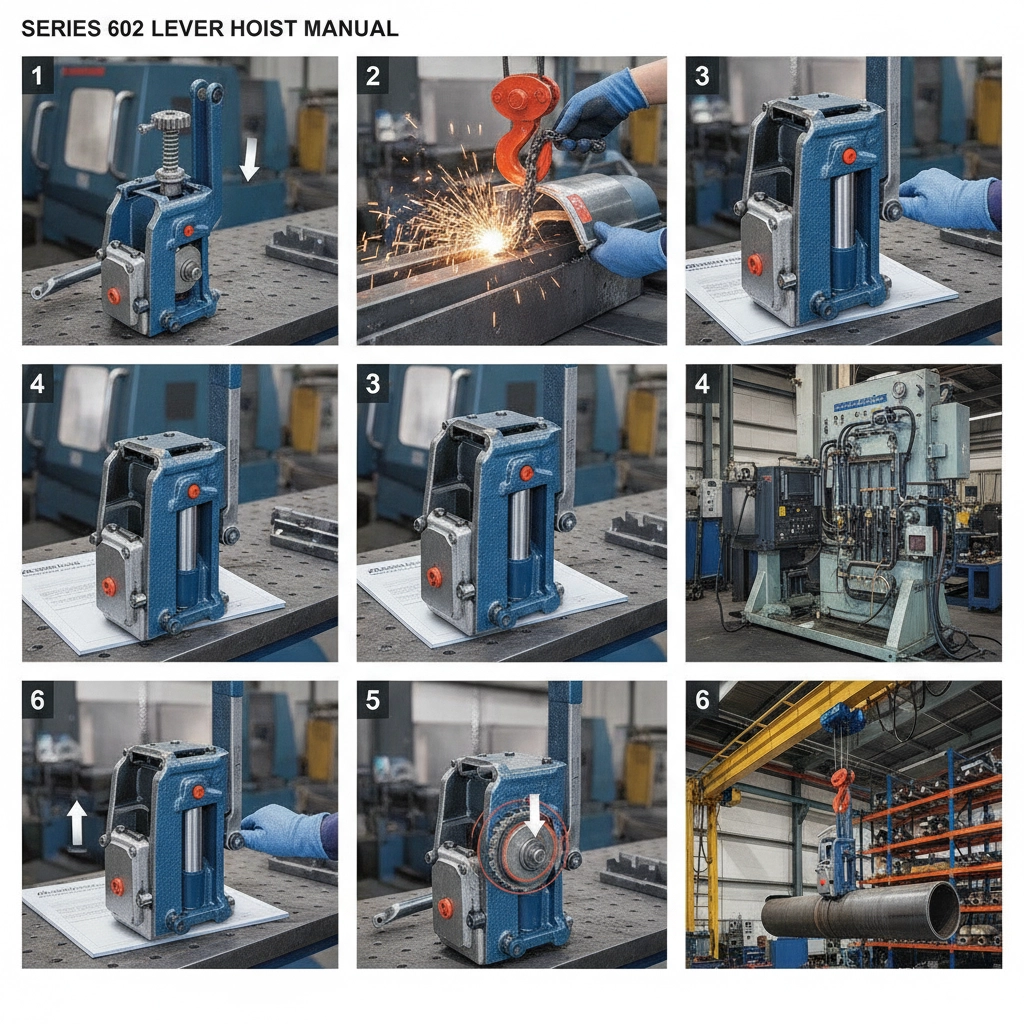
Essential Setup According to the Series 602 Lever Hoist Manual
Before initiating any lift, the series 602 lever hoist manual emphasizes a rigorous pre-operation check. First, ensure that the load does not exceed the rated capacity of the hoist. Inspect the load chain for any signs of twisting, corrosion, or wear. The hooks must be checked for any deformation or cracks in the welds. A properly set-up hoist is the first line of defense against workplace accidents. Once the equipment is inspected, secure the hoist to a stable overhead support point and ensure the load is balanced to prevent swaying during the lifting process.
Quick Setup Tip: Always pull the chain fully out before attaching the hook to the load to ensure there are no kinks or overlaps that could cause a sudden jerk during the initial lift.
Operational Steps and Efficiency Tips
Operating the Series 602 hoist is intuitive, yet precision is key. By following the steps outlined in the series 602 lever hoist manual, users can achieve smooth vertical or horizontal movement. The lever mechanism allows for incremental adjustments, making it ideal for precision positioning. To lift, move the operating lever to the 'UP' position and pump the handle. To lower, switch to the 'DOWN' position. To hold the load in place, the internal braking system engages automatically, but users should always use secondary supports for long-term suspension of heavy loads to maintain safety standards.
Technical Specifications: Series 602 Lever Hoist Data
Understanding the technical limits of your hardware is a core requirement mentioned in the series 602 lever hoist manual. Different models within the series cater to different load requirements, from light-duty lifting to heavy industrial tasks. The use of high-grade alloy steel for the load chain ensures a high safety factor, while the precision-machined gears reduce the effort required by the operator.
Maintenance Protocols in the Series 602 Lever Hoist Manual
Regular maintenance is the only way to prevent premature wear and tear. As detailed in the series 602 lever hoist manual, lubrication is the most critical task. The load chain and internal gears should be lubricated with high-quality industrial grease every few months, depending on the environment. Avoid using WD-40 as a primary lubricant, as it evaporates too quickly for heavy-load applications. Additionally, check the brake discs for wear and ensure the chain is not stretched beyond the manufacturer's allowable limits.
Common Troubleshooting for Series 602 Users
Even with high-end equipment, issues can arise. The series 602 lever hoist manual provides a troubleshooting matrix to resolve common problems. For instance, if the chain is difficult to pull, it usually indicates a lack of lubrication or a misaligned chain. If the load slips, the brake may be worn or improperly adjusted. Most of these issues can be resolved through basic maintenance, but if a mechanical failure occurs in the gear housing, it is highly recommended to seek professional repair rather than attempting a DIY fix to avoid compromising safety.
Safety Warnings and Compliance
Safety is not an option; it is a requirement. The series 602 lever hoist manual explicitly warns against "side-loading." This occurs when the hoist is pulled at an angle rather than straight up and down, which can cause the chain to jump the sprocket or lead to structural failure. Furthermore, never use a lever hoist for transporting people. Always ensure the working area is clear of bystanders and that the load is securely rigged. Compliance with these rules prevents catastrophic failures and ensures a safe working environment for everyone involved.
Conclusion: The Value of Following the Manual
The series 602 lever hoist manual is more than just a piece of paper; it is a roadmap to operational excellence and safety. By adhering to the setup, operation, and maintenance guidelines, you ensure that your lifting equipment performs reliably under pressure. Investing time in understanding your tools reduces downtime and protects your most valuable asset: your workforce. Always prioritize the guidelines provided by the manufacturer to ensure long-term productivity.
Frequently Asked Questions (FAQs)
How often should I lubricate my Series 602 lever hoist?
According to the general maintenance guidelines in the manual, you should lubricate the load chain and internal gears every 3 to 6 months. However, if the hoist is used in harsh environments—such as coastal areas with salty air or dusty construction sites—this frequency should be increased to every 1 to 2 months. Proper lubrication reduces friction, prevents rust, and ensures the smooth movement of the chain, which significantly extends the overall lifespan of the equipment.
What should I do if the hoist chain becomes twisted?
A twisted chain is a serious safety hazard. If you notice a twist, stop operation immediately. Slowly lower the load (if applicable) and fully extend the chain to identify where the twist occurred. Gently rotate the chain by hand to remove the twist before attempting another lift. The manual warns that operating a hoist with a twisted chain can lead to permanent deformation of the links or cause the chain to slip off the gear, potentially resulting in a load drop.
Can the Series 602 lever hoist be used for horizontal pulling?
Yes, one of the primary advantages of the Series 602 is its versatility in both vertical lifting and horizontal pulling. However, when pulling horizontally, you must ensure that the hoist is anchored securely and that the pull is linear. Avoid any sharp angles during a horizontal pull, as this creates side-loading stress on the internal components. Always refer to the official website for specific load charts related to horizontal tension.
What are the signs that the hoist needs professional repair?
You should stop using the hoist and call a professional if you experience: 1) A "slipping" sensation when holding a load, which indicates brake failure. 2) Unusual grinding noises coming from the gear housing. 3) Visible cracks or bending in the hooks. 4) The chain showing excessive wear or "stretching." These issues cannot be fixed with simple lubrication and require a teardown and inspection by a certified technician to ensure the hoist remains safe for industrial use.
Хамгийн сүүлийн үеийн мэдээ
Professional Guide to Cable Installation with Ethernet Fish Tape
МэдээJul.01,2026
Professional Cable Installation Guide Using a Fish Tape
МэдээJun.29,2026
Professional Cable Installation Guide with 30m fish tape
МэдээJun.27,2026
Mastering Cable Installation with the 1 2 fish tape Guide
МэдээJun.26,2026
Ultimate Guide to Using 3 8 Fish Tape for Electrical Wiring
МэдээJun.25,2026
Best Electric Hoists for Sale A Complete Industrial Buyers Guide
МэдээJun.23,2026
- ХОЛБОО БАРИХ
- ADDRESS: 188, Fengshou Road, Shijiazhuang. China
- EMAIL: info@bilopowtel.com
- УТАС: 0086-311-88862036
- WHATSAPP: 0086-152-26563165





