







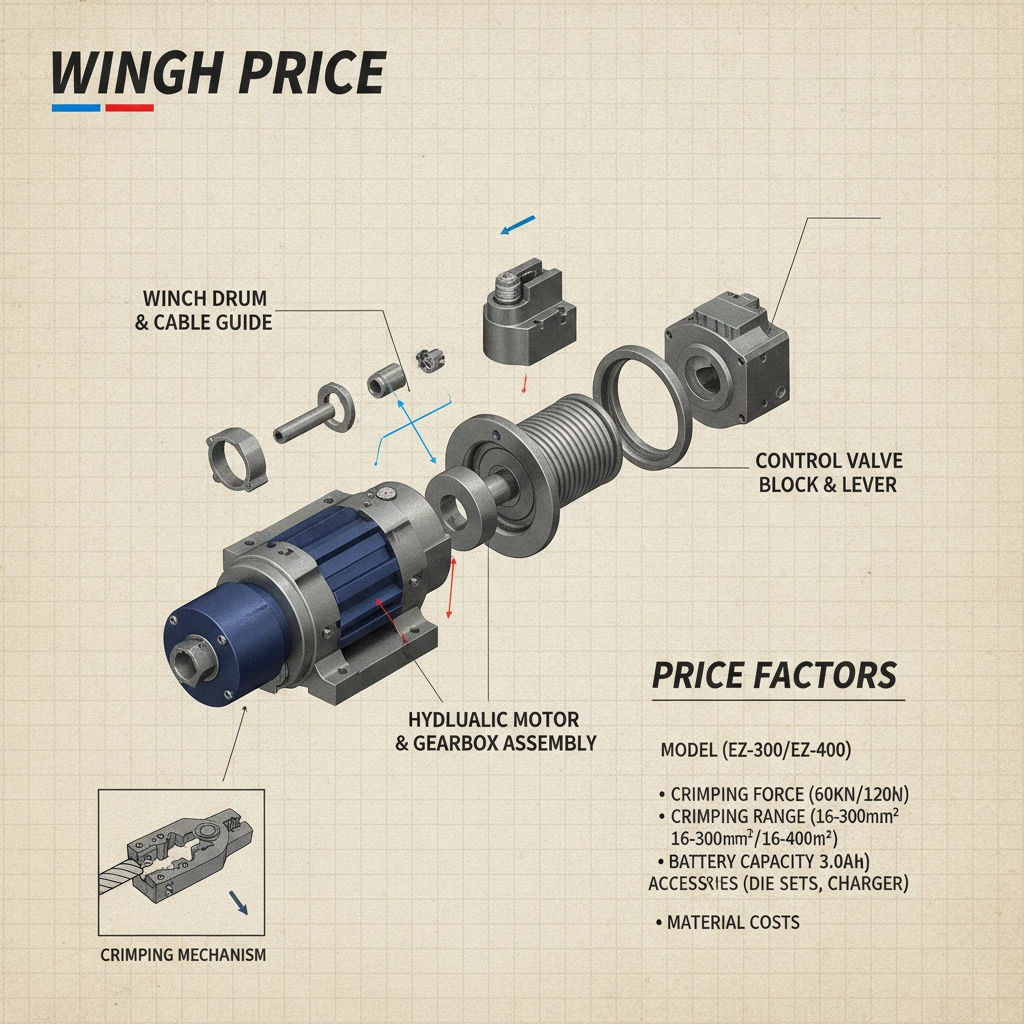
When evaluating the investment for cable pulling infrastructure, understanding the winch price requires more than a simple quote comparison. In the power and telecommunications sectors, a winch is not merely a pulling tool but a critical component of the cable-laying sequence that affects both project timelines and safety. This article analyzes the technical variables that dictate costs and how to select a system that balances initial expenditure with long-term operational efficiency.
The volatility in pricing for heavy-duty cable equipment often stems from variations in motor efficiency, load-bearing capacity, and the sophistication of the control systems. For procurement managers in the construction and utility industries, the challenge lies in identifying where high-specification features provide genuine value and where basic industrial standards suffice. This involves a deep dive into the relationship between hydraulic power, mechanical advantage, and the specific requirements of the cable type being deployed.
Readers will gain an understanding of the core technical benchmarks used to evaluate supplier offerings, the impact of portable versus stationary designs on overall project costs, and a framework for assessing the total cost of ownership. By the end of this guide, you will be equipped to navigate the commercial landscape of power equipment procurement with a focus on technical validity and commercial sustainability.
Analyzing Cable Winch Cost Drivers
The pricing architecture of professional cable pulling winches is primarily driven by the engineering requirements of the load. In the utility sector, the cost is heavily influenced by the maximum pulling force and the drum capacity. Higher tonnage requirements necessitate reinforced steel frames and high-torque gearboxes, which naturally increase the manufacturing cost. Beyond the raw pulling power, the integration of precision control systems—such as variable speed drives or remote-operated hydraulic valves—adds a layer of technological value that allows for the delicate handling of fiber optic or high-voltage cables, preventing damage during the pull.
Furthermore, the operational environment plays a significant role in cost determination. Winches designed for corrosive environments, such as coastal regions or industrial chemical plants, require specialized alloys and protective coatings. The shift toward sustainable energy and smart city infrastructure has also increased the demand for portable, battery-operated, or hybrid systems. These units incorporate high-performance lithium batteries and energy-efficient motors, which, while increasing the initial purchase price, significantly reduce the cost of onsite power generation and labor during installation.
Strategic Procurement of Cable Pulling Equipment
Procuring a winch system requires a synchronized approach between the engineering requirements of the cable route and the commercial constraints of the project budget. To optimize the return on investment, buyers must evaluate the equipment based on a matrix of technical specifications and operational flexibility. The following analysis breaks down the seven critical dimensions that influence the final cost and performance of a cable pulling system.
Capacity and Pulling Force
The rated pulling capacity is the most direct influencer of the cost. A winch designed for 10 tons will have entirely different structural requirements than one designed for 50 tons. It is essential to calculate the maximum tension expected, including friction losses from bends and conduits, to avoid over-specifying the equipment, which leads to unnecessary expenditures.
| Capacity Range | Primary Application | Structural Requirement | Cost Impact |
|---|---|---|---|
| Light Duty (<5T) | Telecom/Fiber | Light Steel/Aluminum | Low |
| Medium Duty (5-20T) | Urban Power Grid | Reinforced Steel | Moderate |
| Heavy Duty (20-100T) | Industrial/Subsea | Heavy Gauge Alloy | High |
| Ultra Heavy (>100T) | Mining/Bridge | Custom Engineered | Very High |
| Variable Range | Multi-project Use | Modular Frame | Moderate-High |
| Precision Low-Tension | Sensitive Data Cables | Tension Monitoring | Moderate |
Power Source Integration
The choice between electric, hydraulic, and battery power fundamentally alters the cost structure. Electric winches offer precision and are ideal for stationary setups but require stable power grids. Hydraulic systems provide the highest torque-to-weight ratio for extreme loads. Battery-powered units, utilizing lithium technology, increase the upfront price but eliminate the need for external power cables and generators on site.
Material Durability and Coating
Long-term value is determined by the materials used in the drum and chassis. High-grade galvanized steel or powder-coated finishes prevent oxidation in humid environments. For specialized industries, the use of stainless steel or corrosion-resistant polymers is necessary, which increases the procurement cost but extends the equipment's lifespan by several years.
Control Mechanisms and Safety
Advanced safety features, such as automatic overload protection, safety valves, and emergency stop systems, are non-negotiable in professional B2B environments. The cost of these systems is a fraction of the potential cost associated with cable failure or site accidents. Remote control capabilities further enhance safety by allowing operators to maintain a distance from the tension zone.
Mobility and Portability Factors
Equipment that can be easily transported—featuring portable designs, ergonomic handles, or integrated wheels—reduces the labor cost associated with equipment deployment. BILO's focus on portable solutions ensures that equipment can be moved flexibly across various environments, reducing the need for heavy lifting machinery during the setup phase.
Customization for Specialized Cables
Standard winches may not suit all cable types. Customizations, such as specialized cable drums or integrated tension meters, allow for the precise pulling of varied specifications. This capability is often provided by manufacturers who collaborate with technical colleges to innovate materials, ensuring the equipment matches the specific physical properties of the cable.
Lifecycle Maintenance Costs
The total cost of ownership includes the frequency of oil changes in hydraulic systems, battery replacements in electric units, and the wear and tear of the cable rope. Investing in a system with a modular design allows for the easy replacement of worn parts, reducing downtime and the need for complete system overhauls.
প্রায়শই জিজ্ঞাসিত প্রশ্নাবলী
What are the primary factors that influence a cable winch's cost?
The cost is primarily driven by the maximum pulling capacity, the type of power source (electric vs. hydraulic vs. battery), the quality of materials used to prevent corrosion, and the sophistication of the safety and control systems. Additionally, features like portability and custom drum specifications for particular cable diameters will impact the final pricing.
Is a battery-powered winch more cost-effective than a diesel-hydraulic one?
While battery-powered winches often have a higher initial purchase price due to the cost of high-performance lithium batteries, they are more cost-effective in terms of operational expenditure. They eliminate the need for fuel, reduce noise pollution, and significantly lower the labor and equipment costs required to set up external power sources on site.
How do I determine the correct pulling capacity for my project?
You should calculate the total cable weight, the coefficient of friction for the conduit or ground, and the number of bends in the route. Adding a safety margin of 20-30% to the calculated maximum tension is standard practice to ensure the equipment operates within its efficient range without risking mechanical failure.
What maintenance is required to preserve the value of the equipment?
Regular maintenance includes inspecting the cable rope for fraying, lubricating gear systems, and checking hydraulic fluid levels and quality. For battery-operated units, maintaining the charge cycles and storing batteries in temperature-controlled environments is critical to extending their lifespan and avoiding premature replacement costs.
Can a single winch be used for both fiber optic and power cables?
Yes, provided the winch has variable speed controls and tension monitoring. Fiber optic cables require very low, precise tension to avoid signal loss, whereas power cables require high force. A versatile system with adjustable settings or interchangeable drums can handle both, though specialized equipment is often preferred for high-volume projects.
How does supplier experience affect the procurement risk?
Experienced suppliers, like those with established global export records to over 40 countries, provide a lower risk because they understand diverse international standards and site conditions. They are more likely to offer customized solutions and professional technical support, which prevents costly errors in equipment selection and installation.
References and further reading
- International Standards for Electrical Cable Installation and Pulling Tension.
- Guide to Hydraulic System Maintenance for Industrial Pulling Equipment.
- Comparative Analysis of Lithium-Ion vs. Lead-Acid Power in Construction Tools.





