Heavy Duty Hydraulic Cable Drum Jack and 25 ton shackle price
Heavy-duty cable installation requires equipment that balances raw lifting power with operational precision. When managing large-scale power and utility projects, the ability to securely lift and rotate cable drums weighing several tons is not just a matter of efficiency, but a critical safety requirement. Hydraulic drum jacks provide the mechanical advantage necessary to elevate massive reels, ensuring that cables are paid out smoothly without twisting or friction that could compromise the integrity of the conductor or fiber optic core.
For procurement managers and site engineers, evaluating equipment involves more than just looking at a 25 ton shackle price or a basic load rating; it requires understanding the synergy between lifting capacity, stability on uneven ground, and the ease of transport. Whether deploying underground electrical systems or high-capacity utility networks, the right lifting solution reduces manual labor and mitigates the risk of workplace injuries, making high-performance hydraulic jacks an indispensable asset for any professional cable laying team.

Engineering Principles of Hydraulic Cable Drum Lifting Systems
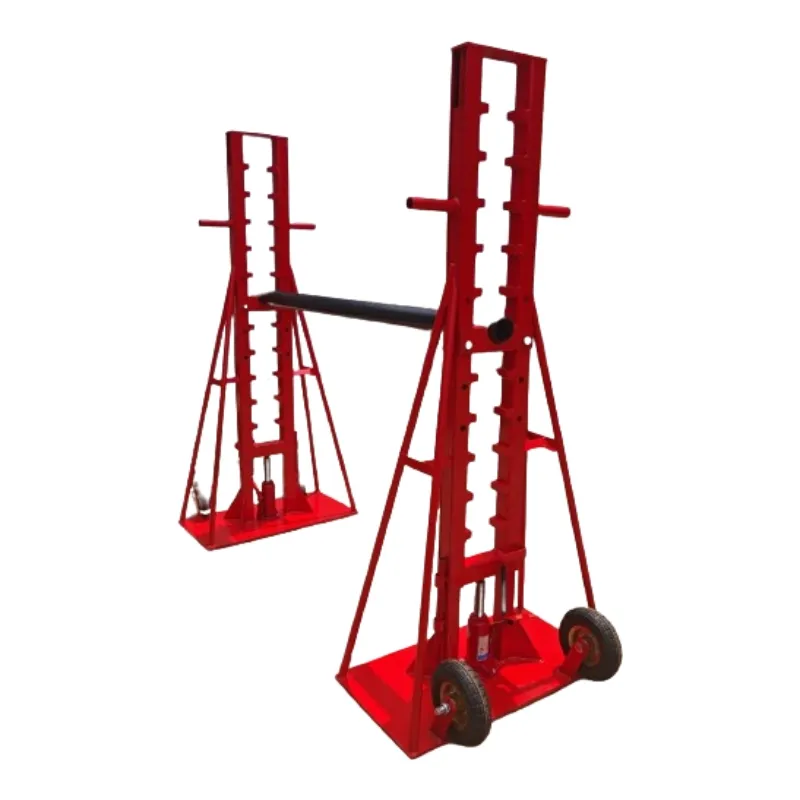
The core function of a hydraulic cable drum jack is to convert fluid pressure into vertical lifting force, allowing operators to raise heavy cable reels off the ground with minimal physical effort. These systems are engineered with a heavy-duty ground plate to distribute the load effectively, preventing the equipment from sinking into soft soil or tilting on construction sites. The integration of solid trusts fitted with wheels ensures that once the equipment is positioned, it can be transported across the site with relative ease.
From a technical standpoint, the use of hydraulic mechanisms allows for a controlled ascent and descent. This precision is vital when handling reels that can weigh up to 15 tons, as any sudden shift in weight could lead to instability. The inclusion of specialized spindles and fixing clamps ensures that the drum remains centered and secure during rotation, eliminating the risk of the axle lever bending due to uneven force distribution.
- Load Distribution: Wide base plates ensure stability on diverse terrains.
- Mechanical Advantage: Hydraulic cylinders reduce the man-hours required for setup.
- Axle Security: Dedicated fixing clamps prevent lateral movement during payout.
- Mobility: Integrated wheel systems facilitate rapid site redeployment.

Operational Safety and Site Implementation Protocols
Safety in cable handling is predicated on strict adherence to operational limits. Before any lifting operation begins, the total weight of the cable reel must be confirmed to prevent overloading the hydraulic system. A common failure point in site operations is the uneven placement of the reel; it is imperative that the cable reel is positioned exactly in the middle of the pay-off stand to ensure a balanced load and prevent axle deformation.
Furthermore, stability is non-negotiable. These jacks must be operated on stable, level ground to avoid tipping. A critical safety step often overlooked is the simultaneous lifting of both supports. If one side is raised faster than the other, the axle lever may tilt, causing the reel to shift or slide off the supports. Once the reel is at the desired height, the supports must be anchored firmly before the cable is paid off to counter the rotational force generated during pulling.
Selecting the Appropriate Capacity for Utility Infrastructure
Choosing the right jack capacity depends on the specific requirements of the cable type and reel size. In large-scale industrial projects, where reels can exceed 1,800 meters in length, heavy-duty hydraulic models are the only viable option due to their superior lifting power. Smaller, indoor installations might utilize mechanical or screw-type jacks, but these lack the efficiency and speed of hydraulic systems when scaling up to 10 or 15-ton loads.
Beyond raw capacity, buyers should evaluate the material construction. Steel-based jacks offer maximum structural rigidity for the heaviest tasks, while aluminum components may be used in specific contexts for corrosion resistance and reduced weight. The compatibility of the spindle with various drum diameters is also a key selection criterion, ensuring that the equipment can be reused across different project phases and cable specifications.
Technical Specifications and Load Capacities
| Lifting Capacity | Max Drum Length | Unit Weight (Pair) | Recommended Application |
|---|---|---|---|
| 5 Ton | ≤1500m | 108Kg x 2 | Light Utility/Fiber Optic |
| 10 Ton | ≤1800m | 154Kg x 2 | Medium Power Cables |
| 15 Ton | ≤2000m | 225Kg x 2 | Heavy Industrial Grid |
| Custom High-Load | Application-Specific | Varies by Model | Specialized Infrastructure |
| Standard Pair | Variable | Dependent on Frame | General Construction |
Manufacturing Quality and Procurement Considerations
The reliability of lifting equipment is a direct result of manufacturing precision and material quality. High-grade steel fabrication and rigorous testing of hydraulic seals are essential to prevent pressure loss during critical lifts. When sourcing these tools, procurement managers should prioritize suppliers who integrate research and development with actual field testing to ensure the equipment meets evolving market demands for durability and safety.
From a commercial perspective, the total cost of ownership is more important than the initial 25 ton shackle price or the unit cost of the jack. Maintenance-free components, corrosion-resistant coatings, and the availability of replacement seals significantly impact the long-term value. Flexible payment terms and the ability to provide customized production based on specific project dimensions allow companies to optimize their equipment fleet for maximum utility across multiple job sites.
Future Trends in Cable Handling and Lifting Technology
The industry is moving toward more integrated and "smart" cable handling solutions. We are seeing a shift toward lightweight, high-strength alloys that maintain the load-bearing capacity of steel while reducing the logistical burden of transport. Additionally, there is an increasing demand for foldable and compact designs that allow for rapid deployment in tight urban environments where space is at a premium.
As utility networks evolve toward higher voltages and larger conductor sizes, the weight of cable drums is expected to increase. This trend will drive the development of higher-capacity hydraulic systems with integrated electronic monitoring to alert operators of overloading or imbalance in real-time. Investing in adaptable, high-capacity equipment today ensures that a company remains competitive as infrastructure projects grow in scale and complexity.
Frequently Asked Questions on Cable Drum Jacks
How do I determine the correct lifting capacity for my cable reel?
You must confirm the total weight of the cable reel, including the wooden or steel drum itself, before selection. Always choose a jack with a rated capacity that exceeds the reel weight by a safety margin to avoid hydraulic failure or instability.
Why is it critical to lift both supports simultaneously?
Simultaneous lifting ensures the axle remains horizontal. If one side is lifted unilaterally, the reel can tilt, potentially causing the drum to slide off the supports or putting excessive bending stress on the axle lever.
What safety precautions should be taken on unstable ground?
The jacks should be placed on a heavy-duty ground plate to distribute the weight. If the ground is excessively soft, additional stabilization pads may be required to prevent tipping during the rotation of the reel.
Can hydraulic jacks be used for fiber optic cables as well as power cables?
Yes, they are suitable for any cable type provided the reel weight falls within the jack's capacity. Fiber optic reels are generally lighter, making the 5-ton models highly efficient for these applications.
What maintenance is required for hydraulic drum jacks?
Regularly check hydraulic fluid levels and inspect seals for leaks. Ensure that the wheels and spindles are lubricated and that all fixing clamps are free of corrosion to maintain operational safety.
Does the price of these jacks typically include customization options?
Pricing varies based on specifications. Many manufacturers offer customized production to meet specific drum diameters or load requirements, which may affect the final commercial quote.
Technical References and Industry Standards
- OSHA Rigging and Lifting Safety Guidelines
- ISO Standards for Industrial Lifting Equipment
- IEEE Standards for Power Cable Installation
- ASME B30 Standards for Jacks and Lifting Gear
Selecting the right cable handling equipment is a balance of technical specification and operational safety. By investing in high-capacity hydraulic drum jacks, companies can ensure a seamless installation process that protects both the personnel and the expensive cabling assets.
Related Equipment and Solutions