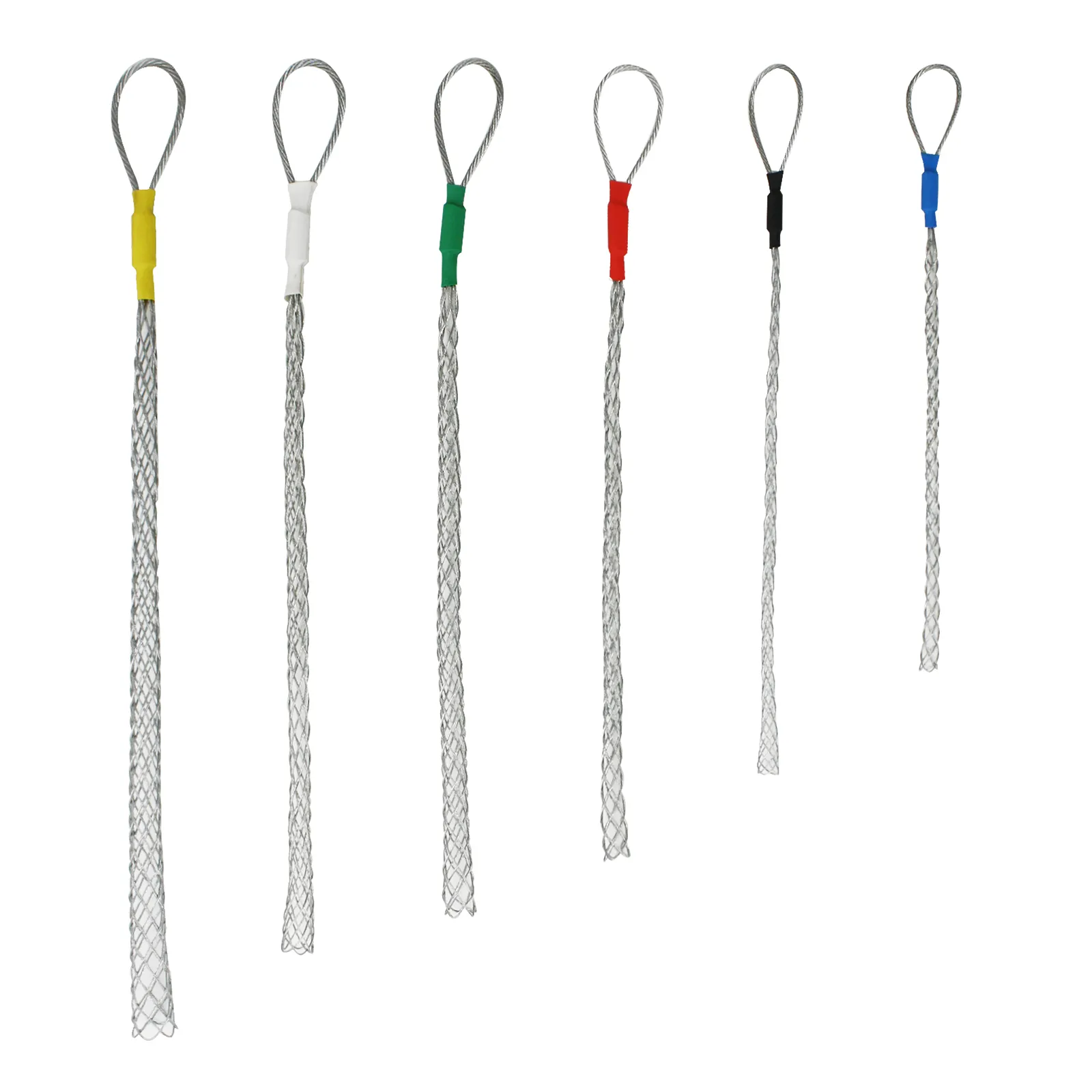
Cable socks, also recognized as cable grips or pulling socks, are high-performance industrial tools engineered specifically for electricians and telecommunication technicians. These specialized devices provide an indispensable secure grip on cables during installation, allowing for smooth pulling through conduits, ducts, and trenches while preventing critical damage to the cable's outer insulation.
Manufactured from premium galvanized or stainless steel wire, our cable socks utilize an advanced braided lattice construction that automatically adjusts its grip as tension increases. This ensures a firm, anti-skid hold that distributes pulling forces evenly, making them the ideal solution for everything from delicate fiber optics to heavy-duty sub-sea and high-voltage power cables.
Detailed Parameters
| Size Range (MM) | 4-6 mm (Blue) | Total Length (MM) | 220 mm |
|---|---|---|---|
| Breaking Strength | 270lb / 122kg | Size Range (MM) | 6-9 mm (Black) |
| Total Length (MM) | 280 mm | Breaking Strength | 490lb / 222kg |
| Size Range (MM) | 9-12 mm (Red) | Total Length (MM) | 310 mm |
| Breaking Strength | 700lb / 317kg | Material Option | Galvanized / Stainless Steel |
Key Advantages
Cable Protection
Distributes pulling forces evenly to prevent jacket deformation and internal conductor damage.
Installation Efficiency
Quick-slip design reduces setup time compared to traditional clamps or manual eyes.
Self-Adjusting Grip
Automatic tightening mechanism ensures the grip strengthens as pulling tension increases.
Extreme Versatility
Suitable for fiber optic, power, sub-sea cables, and umbilical lines in any environment.
Enhanced Safety
Prevents dangerous cable recoil and slippage, protecting onsite crews from accidents.
Corrosion Resistance
Available in stainless steel for harsh industrial, marine, or outdoor humid environments.
Product Gallery
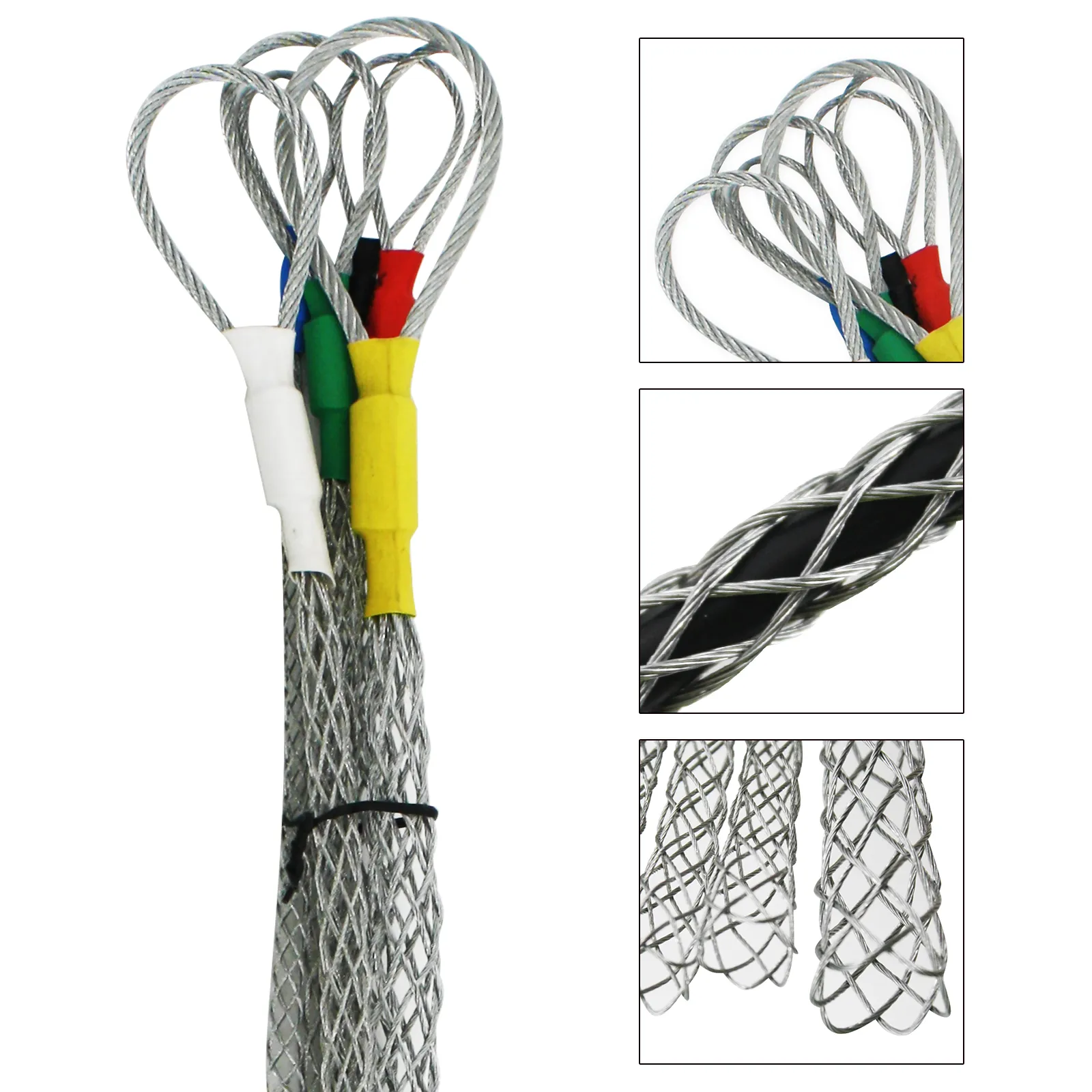
Management Platforms
Size Selection
Precise matching of sock diameter to cable sheath for maximum grip stability.
Lattice Tuning
Multiple weave options (single, double, triple) to achieve specific pulling strengths.
Wear Inspection
Routine checks for broken strands or corrosion to prevent mid-pull failure.
Cleaning Protocol
Post-installation cleaning to remove debris and prevent metal oxidation.
Storage Control
Dry, chemical-free storage to maintain mesh integrity and avoid deformation.
Personnel Training
Certified handling to ensure load limits are respected and safety protocols followed.
Investment Return Comparison
| Metric | Traditional Clamping | Professional Cable Socks |
|---|---|---|
| Installation Speed | Slow / Manual | Fast / Efficient |
| Cable Damage Risk | High (Localized Stress) | Low (Even Distribution) |
| Labor Costs | Higher due to setup | Lower due to speed |
| Safety Rating | Moderate | High (Anti-Slippage) |
| Long-term Value | Higher repair costs | Lower maintenance costs |
Frequently Asked Questions
You should select the cable sock based on the outside sheath diameter of your cable. Ensure the mesh fits snugly; oversized socks may slip, while undersized ones may cause excessive compression.
Galvanized steel is suitable for general industrial use, while stainless steel offers superior corrosion resistance, making it essential for marine, sub-sea, or highly humid outdoor environments.
Yes, they are ideal for fiber optic cables. The mesh design distributes pulling forces evenly, protecting the sensitive internal glass fibers from localized stress and deformation.
First, widen the lattice by pressing the end against a hard surface. Slide the sock over the exposed end of the cable and push it firmly. Finally, attach your pulling line to the loop securely.
Inspect for signs of fraying, broken strands, severe rust, or deformation of the mesh. Any damage to the structural integrity can lead to slippage and should result in immediate replacement.
Store them in a dry, clean environment away from moisture and chemicals. Hanging metal socks or coiling synthetic ones prevents tangling and maintains the lattice structure.