The Heavy Duty Triple Corner Cable Roller is a professional-grade cable guiding solution specifically engineered for the most demanding infrastructure projects. Designed to navigate complex routes with multiple bends, this tool ensures that high-tension power and telecommunication cables are laid smoothly and safely around 90-degree corners without risking insulation damage or structural flattening.
Featuring a robust triangular configuration of high-strength rollers, this equipment minimizes friction and distributes pulling pressure evenly. Whether deployed in underground electrical ducts, power stations, or telecommunication tunnels, these rollers provide the critical support needed to enhance installation efficiency and prolong the service life of expensive cabling assets.
Detailed Parameters
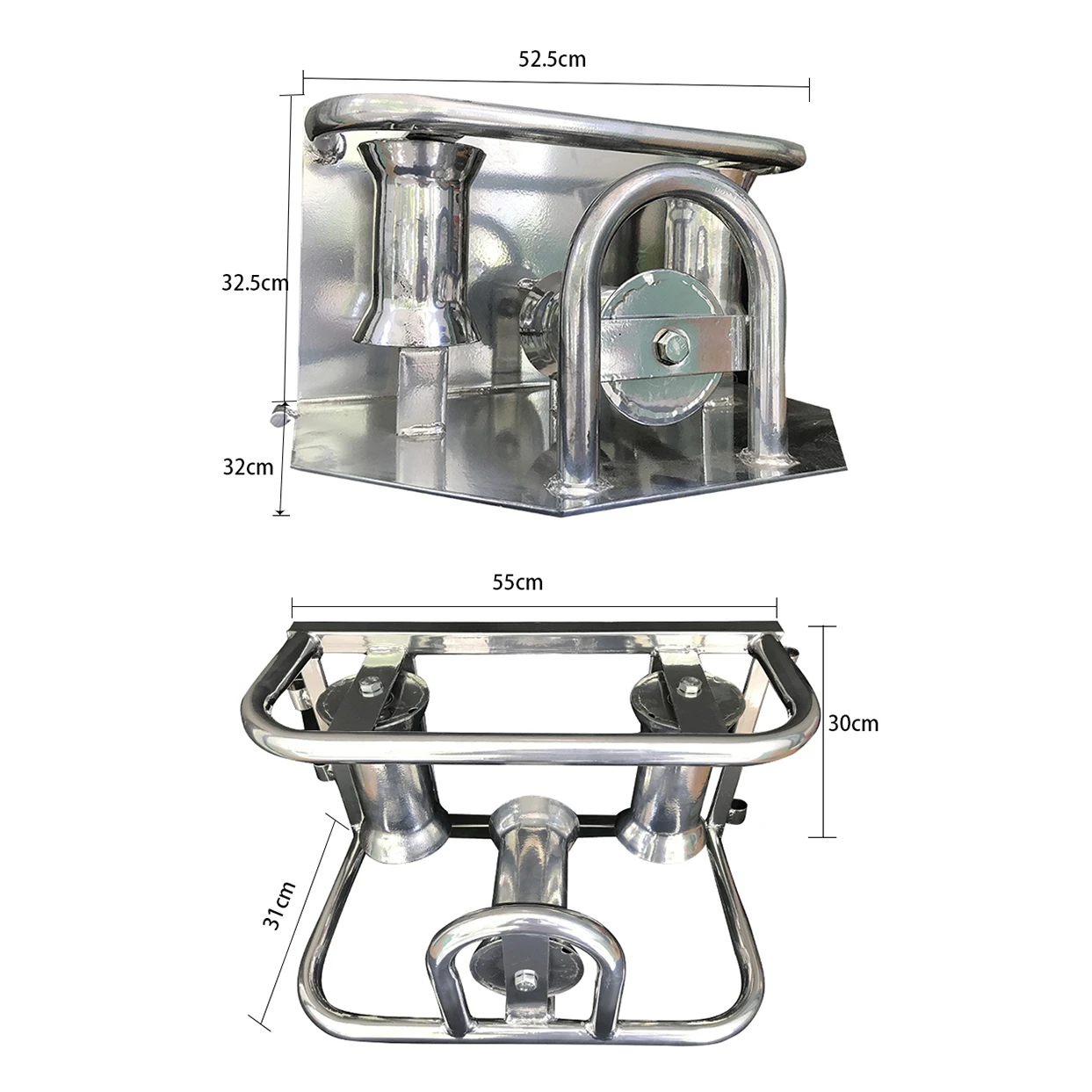
| Model HCDL-22 Length | 55 cm | Model HCDL-22 Width | 31 cm |
|---|---|---|---|
| Model HCDL-22 Height | 30 cm | Model HCDL-22 Weight | 12 kgs |
| Model HCDL-23 Length | 52.5 cm | Model HCDL-23 Width | 32 cm |
| Model HCDL-23 Height | 32.5 cm | Model HCDL-23 Weight | 16 kgs |
| Roller Diameter | 110mm (Waisted Steel) | Roller Configuration | Triple Corner Design |
Key Advantages
Heavy-Duty Build
Constructed from high-strength materials to withstand significant tensile force and cable weight during heavy-duty laying.
Enhanced Efficiency
The unique triple corner structure allows seamless adaptation to various angles, accelerating the installation process.
Extreme Durability
Utilizes wear-resistant materials and sealed ball bearings to ensure long-term stability and minimal rotation friction.
Corrosion Resistance
Finished with high-quality zinc plating to protect the underlying metal from oxidation in outdoor industrial environments.
Cable Protection
Prevents abrasion, flattening, and insulation damage by maintaining a smooth glide around 90-degree bends.
Modular Compatibility
Easily integrates with straight rollers, vertical rollers, and mechanical winches for a complete guiding system.
Product Gallery


Management Platforms
Structural Integrity
Perform regular inspections to ensure the frame and rollers are free from damage or wear.
Lubrication Cycle
Clean dirt from roller surfaces and apply lubricants to minimize friction resistance.
Environmental Storage
Store in dry, well-ventilated environments to prevent moisture-induced corrosion.
Tension Monitoring
Ensure pulling force remains within the heavy-duty rated capacity for maximum safety.
Load Distribution
Utilize the triangular configuration to spread pressure evenly across the cable sheath.
System Integration
Coordinate with drum stands and straight rollers for a streamlined installation workflow.
Investment Return Comparison
| Performance Metric | Traditional Manual Laying | Triple Corner Roller System |
|---|---|---|
| Cable Damage Risk | High (Abrasion/Kinking) | Minimal (Smooth Glide) |
| Installation Speed | Slow / Labor Intensive | Fast / High Efficiency |
| Pulling Force Required | Excessive / High Tension | Optimized / Low Friction |
| Operational Safety | Moderate (Risk of Slippage) | High (Stable Support) |
| Long-term Cable Life | Reduced due to stress | Maximized (Stress-Free) |
Frequently Asked Questions
The triple corner design creates a curved path that supports the cable through 90-degree turns, distributing pressure evenly and preventing the cable from kinking or sustaining insulation damage.
Yes, the smooth rotation and minimal friction provided by the sealed ball bearings make it ideal for delicate fiber optic lines that are sensitive to excessive tension.
Zinc plating acts as a sacrificial layer that protects the steel frame from rust and corrosion, making it highly durable for outdoor and damp industrial environments.
Absolutely. The heavy-duty frame is designed to remain stable even under the high-tension pulling forces generated by mechanical winches in professional cabling operations.
We recommend regular inspections for structural wear, cleaning dirt from the roller surfaces, and applying appropriate lubricants to the bearings to maintain low friction.
They are widely used in power transmission, telecommunication network deployment, underground electrical ducting, and industrial power station installations.